
What is this thing called life?
A bat, a mushroom, a long blade of prairie grass. They're
easy to identify as "life." What about a cold virus? Mold growing
on a slice of bread? Or seeds encased in hard protective "shells" that
can lie dormant for centuries? What, in essence, is this thing
we call life?
Some two billion years ago, tiny single-celled organisms,
Earth's first life forms, did something amazing. In
a world where there was no oxygen, these "micro" organisms
began changing the composition of gases in the atmosphere.
They added oxygen, making the planet habitable for plants
and animals, ultimately creating the living world we see today.
What were the first life forms to use oxygen? NSF-funded
scientists recently discovered two oxygen-carrying proteins
present in descendents of these early microbes. The proteins
are the ancestors to our hemoglobin, which ferries oxygen
throughout our bodies. To life on primordial Earth, however,
oxygen was poison.
In early single-celled organisms, special proteins arose
that captured and transported oxygen, not for use in breathing,
but to "detoxify" it so they could live. Eventually,
microbes came along that put oxygen to good use. Biologists
believe that this transition in the use of oxygen was as
important to life as later adaptations from the sea to land,
from the ground to the air and from walking on "all
fours" to standing upright.
Since that time eons-ago, microbes, plants and animals
have colonized Earth's seas and lands, adapting to
changing environments along the way. The presence of life
has so influenced the nature of our planet, that Earth as
we now know it is a result of the countless intricate interactions
between its living and non-living components.
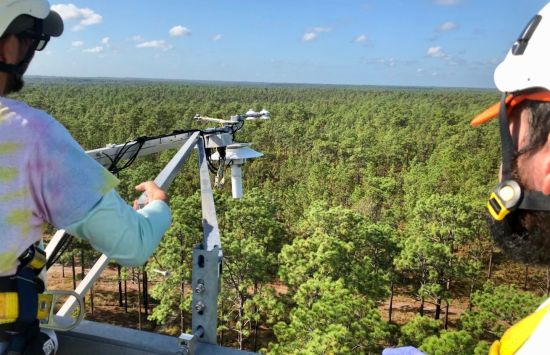
NSF's Biological Sciences Directorate funds scientists
who conduct research on all aspects of life. Researchers
study everything from microbes to rainforests, and the processes
that drive life--from cells to ecosystems--to understand
what life is, how it works and how and why it changes.
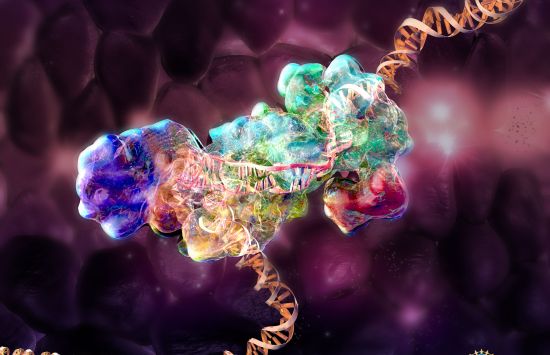
Life on Earth has an active internal chemistry;
materials dissolved in water are changed through biochemical
reactions in cells into the fuel and raw materials that organisms
need to remain alive, grow and reproduce. Cells are life's
factories, powerhouses and libraries. They make up living
organisms, from the single-celled bacteria to the trillions
of cells in a blue whale.
To fuel the chemical reactions that go on in cells, organisms
take in and expend energy. Organisms also reproduce. Using
the instructions encoded in their cells' DNA, organisms
make more of their own kind, assuring the future of life
on Earth. Some non-living things--like crystals--"grow" but
do not have the features necessary for life.
Biologists like those funded by NSF's Directorate
for Biological Sciences are teasing apart how life transmits
its qualities from ancestors to descendants. These scientists
are studying genes--the signal-operators of the functions
of
life--and genomes, the overall pattern of genes in an
organism.
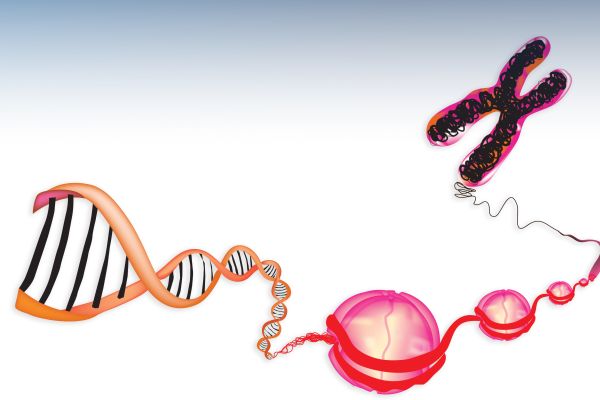
Our new century is the heyday of genomics. Once scientists
know the sequence of an organism's DNA--its specific
arrangement of chemicals--they can identify its genes.
Further studies can then shed light on the function of those
genes, how they're regulated and what part proteins
play in complicated life processes like growth.
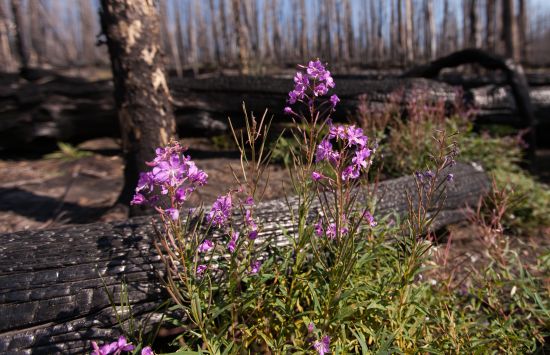
Organisms don't remain the same forever. Without
change, life on Earth would stagnate. Species are in a constant
dance with their environment. When an environment changes,
the species that live within must change too--evolving to better adapt--in order to survive. The end result is the diversity of life we see around
us.
Recent changes in climate, for example--likely caused by
the effects of human activities--are forcing many animals
and plants to "step quickly" to keep up. As Earth's
northern climates warm, formerly southern animals and plants
are moving northward. Individuals better adapted to their
environment are more likely to survive and successfully have
young. At the same time, life today, like the earliest microbes
billions of years ago, continues to change Earth's physical
environment. Our understanding of how these changes
occur is still in its infancy.
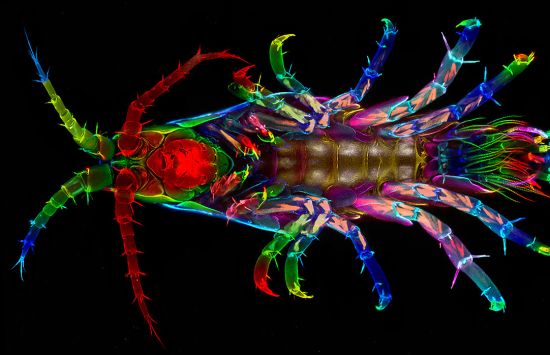
Biologists are life's detectives, discovering how
life works and what makes animals, plants and microbes "alive."
They are asking such questions as:
|