
Considerable evidence indicates that to interest students in science and math,
earlier is better. And, hands-on experiences are important in motivating students
to pursue higher learning and continue in those disciplines as they make career
choices. Evidence also points to a lack of motivation among young women to
enter many fields of science, mathematics, engineering and technology although
they perform academically as well or better than their male counterparts.
To respond to national needs for a diverse workforce in
academic, professional and technical fields (including teachers),
NSF provides major funding support for students to pursue
such careers, and to encourage programs for gender equity
and minority participation.
NSF's Gender Equity program has been geared toward
meeting the goals of the 1981 Equal Opportunity for Women
and Minorities in Science and Technology Act. Overall, NSF
investments have significantly improved participation of
women and minorities in many key fields and expanded the
undergraduate and graduate level student pipeline so more
are entering careers in science, technology, engineering
or mathematics.
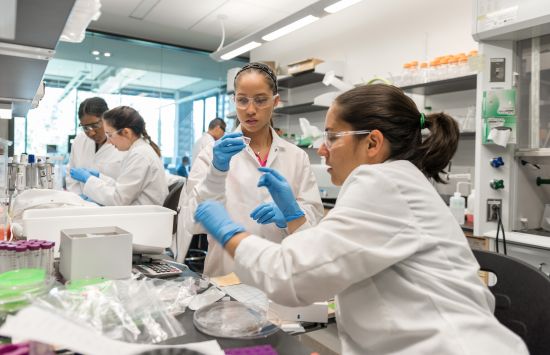
Gender equity programs have provided informal science venues
for young women to experience hands-on learning in many forms
and to overcome psychological obstacles when it comes to
"performing with the boys." One evaluation project,
Operation Smart, found that girls like "getting messy" as
part of learning science. They also like the aesthetics of
math, science and technology, and direct involvement and
communication is more important to girls than demonstrations
or Internet learning.
NSF's Louis Stokes Alliances for Minority Participation
(LSAMP) program has now produced more than 25,000 minority
baccalaureates in science, mathematics, engineering and technology.
A new component of the program, the Bridge to the Doctorate
initiative, will provide support to selected students who
have received bachelor's degrees through LSAMP to pursue
graduate study.
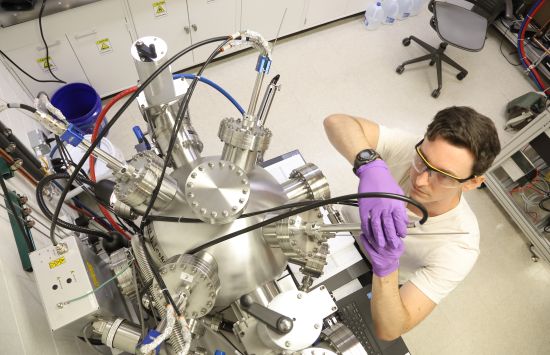
The Research Experiences for Undergraduates Sites program
allows college students to experience "doing science" as
they evaluate potential careers. At the University of Maryland,
students carry out summer research in different physical
science and engineering (S&E) topics. The program has
drawn many underrepresented minority women from the university's
Research Internships in Science and Engineering program, separately
funded by NSF's Gender Equity program. Entrance of
program participants into the workforce will help address
the nationwide need to increase participation among underrepresented
groups in S&E fields.
NSF supports the overall health of the academic and professional
workforce in other ways. Its longest-running effort is the
Graduate Research Fellowship program, started in 1952. This,
and the more recent Integrative Graduate Education and Research
Training (IGERT) program, develops a cadre of future researchers
and Ph.D.-level industry professionals who may contribute
to a variety of disciplinary areas important to the nation.
An IGERT program at Drexel University, in conjunction with
the University of Pennsylvania, is graduating a new generation
of Ph.D.s. trained in nanofibers and their manufacture. The
schools have implemented a nanotechnology certificate program
in which students gain a solid disciplinary background and
technical qualifications to aid them in academic or industrial
careers.
Back to Overview
|