




We operate some of the finest astronomical research facilities in the world, with observatories on nearly every continent — even Antarctica.
Whether it's capturing the first historic images of black holes, observing the faint ripples in spacetime of colossal cosmic explosions from billions of years ago, or imaging the births and deaths of stars, NSF-supported research builds knowledge of the universe and humanity's place within it.
By supporting the research community, we help to advance:
- The discovery of planets orbiting other stars and the search for life on these worlds.
- Understanding of the origin and evolution of the early universe.
- Understanding of mysterious dark matter and dark energy, which together comprise 95% of the observable universe.
What we support
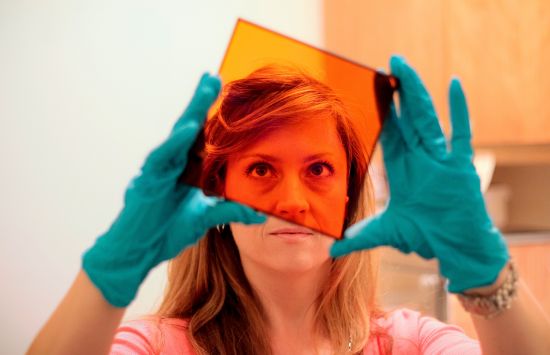
Cutting-edge research
We support advanced research in all areas of astronomy and astrophysics, and the development of technology and instrumentation that enables forefront research.
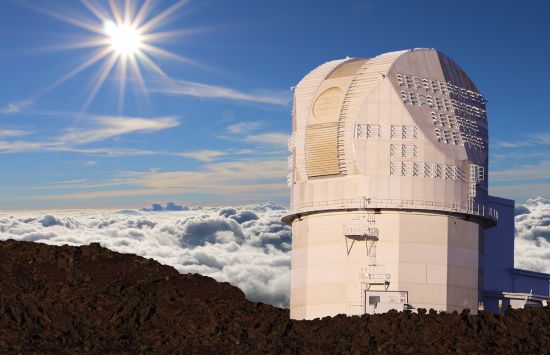
World-class facilities
We support next-generation telescopes, observatories and other major research facilities that open windows to the universe.
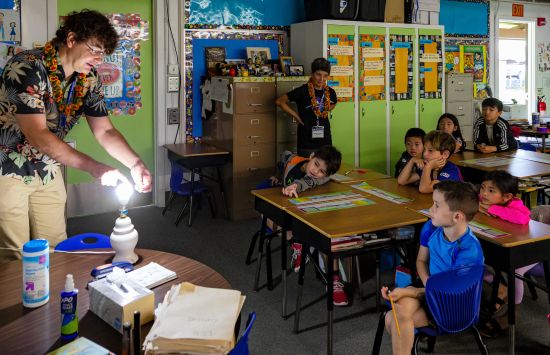
Education and training
We train the next generation of astronomers and astrophysicists and expand the public's knowledge of astronomy.
Our facilities
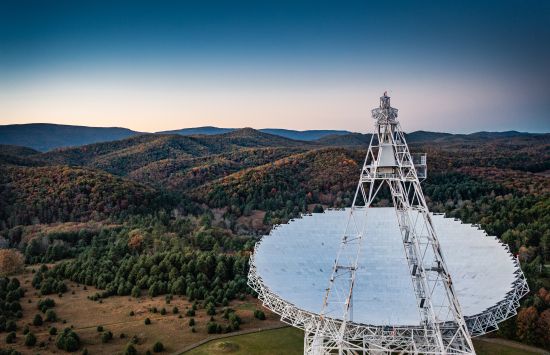
NSF Green Bank Observatory
Since its inception in 1956, Green Bank Observatory — home to the largest fully steerable, single-dish radio telescope in the world — has advanced astronomy in countless ways, studying the origins and evolution of the universe and even searching for signs of intelligent alien life.
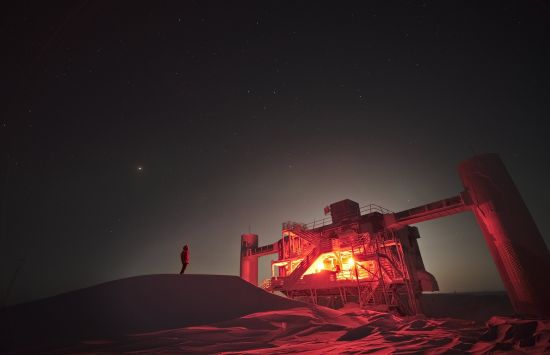
NSF IceCube Neutrino Observatory
NSF's IceCube Neutrino Observatory is an enormous and unusual telescope: a grid of thousands of sensors embedded in a cubic kilometer of ice deep in the Antarctic ice sheet that allows it to detect tiny, elusive neutrinos — the least understood particles in the Standard Model of particle physics.
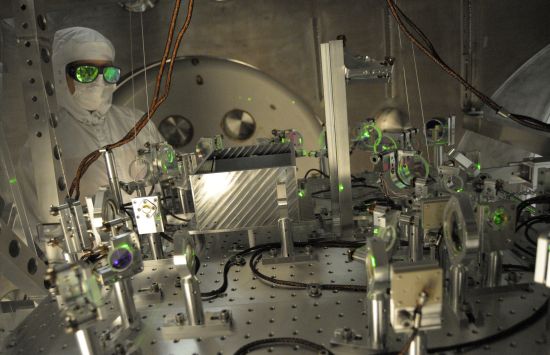
NSF Laser Interferometer Gravitational-wave Observatory
NSF LIGO is the most sophisticated detector of its kind ever created. In 2015, mere days after its advanced instruments were switched on, LIGO detected gravitational waves for the first time, confirming a major prediction of Albert Einstein's 1915 general theory of relativity.
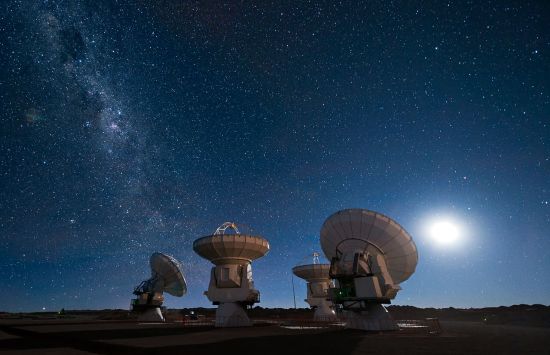
NSF's National Radio Astronomy Observatory
NSF's National Radio Astronomy Observatory designs, builds and operates state-of-the-art radio telescopes used by scientists from around the world. Its facilities include:
NSF's National Solar Observatory
NSO advances understanding of the sun — as a star, the heart of the solar system and the biggest external influence for life on Earth. It operates the new Daniel K. Inouye Solar Telescope: the largest, most powerful, solar telescope on Earth, which recently provided the most detailed images of the solar surface ever recorded.
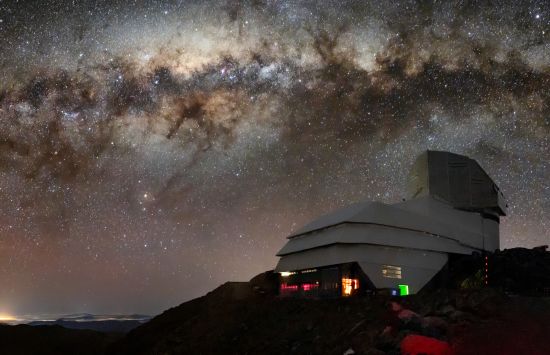
NSF's NOIRLab
NSF's National Optical-Infrared Astronomy Research Laboratory is the nexus for U.S. ground-based, nighttime optical and infrared astronomy. Its observatories include:
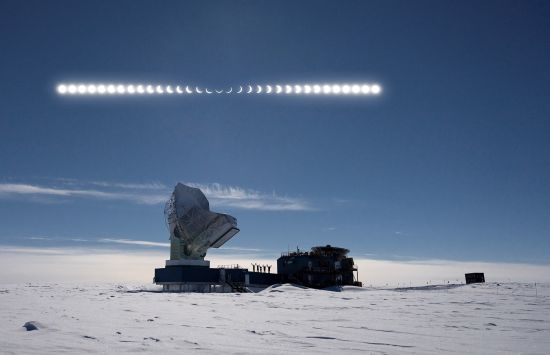
NSF South Pole Telescope
The largest telescope at the South Pole, this observatory studies the cosmic microwave background radiation to learn more about dark energy and its role in the universe's expansion.
Featured news

Educational resources
View lesson plans, activities and multimedia for K–12 audiences that focus on explorations of astronomy and space.
View the resources