

Since the 1960s, the U.S. National Science Foundation has invested in powerful computing capabilities that drive innovation across the nation.
NSF-funded cyberinfrastructure — the hardware, software, networks, data and people that underpin today's advanced computing technology — has enabled transformative scientific discoveries. This infrastructure helps researchers decipher genomes, map new regions of the Arctic, detect signs of dark matter and understand the inner workings of the human brain.
To maintain its competitive edge and security, the U.S. must continue to pioneer computer systems, from advanced memory and new semiconducting materials to quantum computers. These advancements will unlock new opportunities for the future, like intelligent transportation systems, personalized health care and human-like virtual assistants.
 On this page
Brought to you by NSF
NSF's decades of sustained investments have ensured the continual advance of computing technology and infrastructure. Trailblazing work supported by NSF includes:
The internet
Drawing on the Defense Advanced Research Projects Agency's support for early computer networking projects and the development of internet protocols, NSF funding catalyzed the creation of the commercial internet of today.
Data compression
NSF funding played a critical role in the development of data compression algorithms used in cloud storage, digital streaming, hard drives and other technologies.
Supercomputers
Since the 1980s, NSF has funded some of the most powerful supercomputers in the world, including Frontera and Delta, and made these resources widely available to the research community.
Digital search engines
NSF-funded research led to the creation of new ways to search the internet using a page-ranking system, a central component in Google's search engine.
Logo
NSF funded the research behind Logo, the first programming language designed specifically for kids.
What we support
Fundamental and translational research
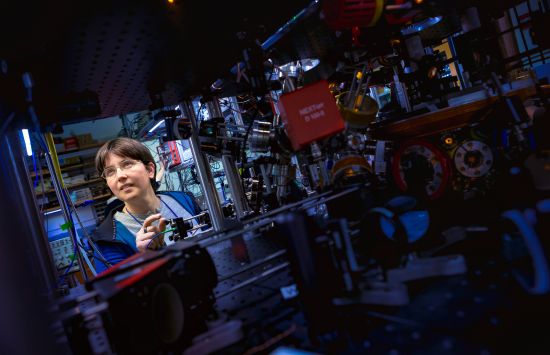
We support research that expands cyberinfrastructure capabilities through seamless integration of advanced hardware, software, networking and data resources.
Access to cyberinfrastructure
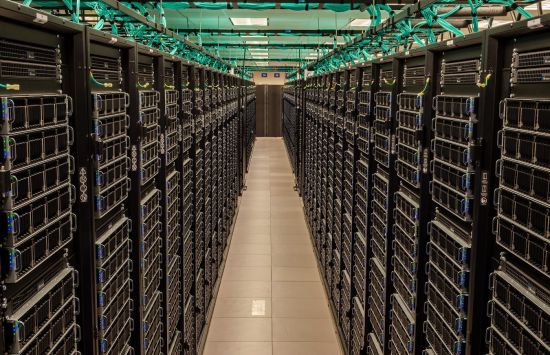
We support the development, acquisition and provision of state-of-the-art cyberinfrastructure resources, tools and services essential to science and engineering.

Education and workforce development
We invest in education and training to foster a nationwide research and development ecosystem for cyberinfrastructure and to nurture a diverse, skilled cyber workforce.

Partnerships to accelerate progress
We partner with other federal agencies, industry and nonprofits to share data, tools, expertise and other resources; strengthen workforce development; and translate research into products and services that benefit society.

NSF-wide infrastructure programs
Major Research Instrumentation Program: Supports requests for up to $4 million from NSF for the development or acquisition of multi-user research instruments that are critical to the advancement of science and engineering.
Mid-scale Research Infrastructure-1: Supports the design and implementation of research infrastructure — including equipment, cyberinfrastructure, large-scale datasets and personnel — whose total project costs exceed NSF's Major Research Instrumentation program but are under $20 million.
Mid-scale Research Infrastructure-2: Supports the implementation of research infrastructure — including equipment, cyberinfrastructure, large-scale datasets and personnel — whose total project costs fall between $20 million and $100 million.
Featured funding

Computer and Information Science and Engineering: Core Programs
Supports research and education projects across computing, communications, information science and engineering, and advanced cyberinfrastructure.

America's Seed Fund (SBIR/STTR)
Supports startups and small businesses to translate research into products and services, including cloud and edge computing, for the public good.

Advanced Computing Systems and Services
Supports organizations that will provide equitable access to advanced cyberinfrastructure resources in production operations, supporting data-intensive computational research.

Campus Cyberinfrastructure
Supports coordinated campus-level networking and cyberinfrastructure improvements for science applications and distributed research projects.

Cyberinfrastructure for Sustained Scientific Innovation
Supports interdisciplinary efforts to successfully integrate the development, deployment and support of cyberinfrastructure services with innovation and research.

Experiential Learning for Emerging and Novel Technologies
Supports inclusive experiential learning opportunities that provide cohorts of diverse learners with the skills needed to succeed in advanced computing, cyberinfrastructure and other emerging technology fields.