




'Hooked hairs' give bean roots an advantage in poor soils
NSF-funded researchers have identified a new cell type hidden on the roots of common beans that may hold the key to helping young plants survive nutrient-poor, dry soils long before their mature root systems take shape.
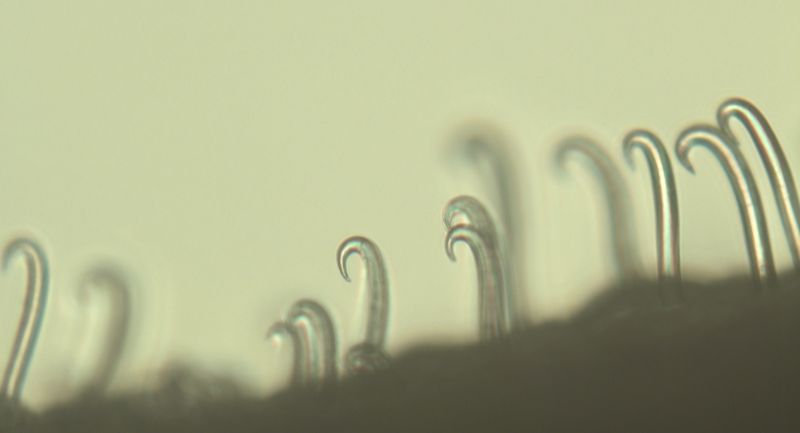
Termed "hooked hairs," these specialized cells form tiny, pointed structures underground that serve as a frontline point of action for the germinating seed to take up essential nutrients and water to support growth.
Common beans include species like fresh green beans and varieties usually found dry on the grocery shelves, like pinto, black and red beans. These beans are grown worldwide and serve as important sources of plant-based protein, iron and dietary fiber.
In the field, young bean plants are especially susceptible to drought, pests and nutrient starvation, with 5% to 20% of seedlings typically failing.
The hooked hairs were discovered in a study aimed at understanding how young bean plants adapt to tough conditions. The research team used a specialized digital imaging system to look at bean roots growing underground in controlled conditions.
They found that hooked hairs — compared to other root cells — have a unique shape as well as an enhanced ability to take up essential nutrients very early in root growth. The team suggests that this feature may help the roots resist harmful pests, like soil nematodes, which are a huge cause of crop loss in the field. Future research will test this idea.
"Discovery of new hooked hair cells and their role in nutrient uptake during early seedling establishment is key to promoting crop yield," said Pankaj Jaiswal, NSF Directorate for Biological Sciences program director. "The finding may also open new avenues for developing plant biotechnology applications to 'mine' and harvest valuable minerals directly from soil."
Read more at:
- Arizona news: Cool beans, smart roots: Scientists discover a new cell that helps seedlings survive drought-battered and nutrient-poor soils
- ScienceAdvances: Hooked hairs: A cellular key adaptation aiding seedling survival in nutrient-limited and drought conditions