

Get EDU Email Updates
The U.S. National Science Foundation Directorate for STEM Education (NSF EDU) strengthens the nation by ensuring a strong foundation in science, technology, engineering, and mathematics (STEM) knowledge and understanding, fostering a scientifically informed citizenry, and developing the highly skilled and capable workforce of scientists, technicians, engineers, mathematicians, and educators essential to America's innovation, competitiveness, and security.
NSF EDU supports STEM education innovation and talent development at all levels and in a variety of settings — from learners of all ages to the skilled technical workforce to innovators and beyond.
The directorate:
- Invests in talented individuals and innovative projects across all STEM disciplines through scholarships, fellowships, partnerships, centers, and more.
- Builds institutional capacity, improves STEM infrastructure, and develops the nation's STEM workforce.
- Supports the translation of research across scientific disciplines into practice, resources, tools, and opportunities aimed at making STEM education and career opportunities available to all Americans.
- Strengthens informal STEM learning outside of the classroom at science centers and museums through innovative challenges and initiatives, films, educational programming, and more.
What we support

STEM workforce and talent development
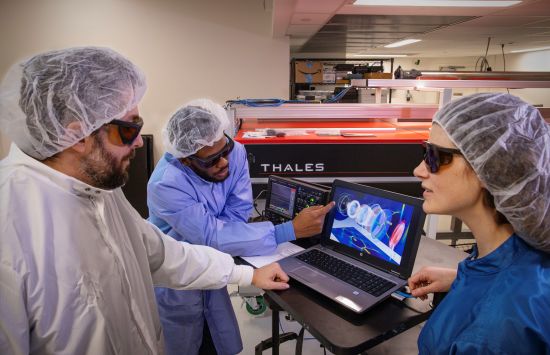
EDU prepares the next generation of STEM leaders for careers by building pathways to the STEM workforce, including via scholarships, fellowships, and traineeships.
The directorate equips individuals for careers across all areas of STEM and through formal and experiential learning opportunities.
STEM education innovation
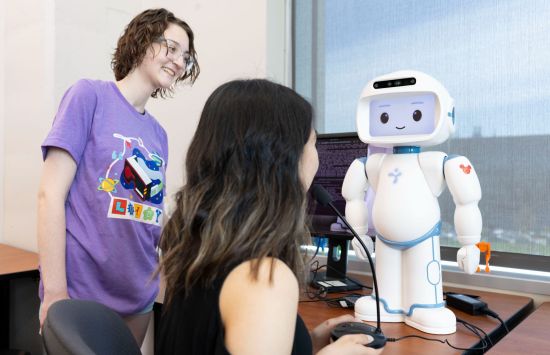
EDU supports innovative, educational initiatives that enhance learning and teaching from pre-K to postgraduates and beyond. These investments help to build powerful tools, STEM infrastructure, networks, and collaborations that push the boundaries of scientific exploration and advance STEM education nationwide.
The directorate also expands opportunities for discovery and innovation by building STEM capacity across regions and organizations, including but not limited to community colleges, nonprofits, and industry.
Recent funding opportunities
Impacts

Artificial intelligence
NSF funding built the foundation for technologies Americans use every day, like chatbots, Face ID and image generators.

AI and the Roman Empire
NSF-powered researchers are using machine learning to uncover previously unattainable information from human history.
Building the STEM workforce of the future
Since the 1950s, NSF's investments in people have fueled scientific progress and strengthened America's innovation engine.

Duolingo
One of the most popular language-learning tools got its start from NSF funding.

Learning beyond the classroom
Throughout its history, NSF has made the excitement of scientific discovery available to everyone by investing in children's TV programming, movies, museum exhibits and apps.

Smartphones
Smartphone technology traces its roots to decades of NSF funding, such as touchscreens, lithium-ion batteries and the internet.
Initiatives
NSF Graduate Research Fellowship Program (NSF GRFP)
Helps ensure the quality, vitality, and strength of the scientific and engineering workforce of the United States.
NSF EPSCoR Graduate Fellowship Program (NSF EGFP)
Supports institutions in EPSCoR jurisdictions by providing funding for graduate fellowships for new or continuing students who received the distinction of NSF GRFP Honorable Mention within the last three years.
Research Experiences for Undergraduates (NSF REU)
The NSF REU program supports intensive research by undergraduate students in any area of research funded by NSF.
AI-Ready America
The NSF TechAccess: AI-Ready America (NSF AI-Ready America) initiative is a nationwide effort to boost artificial intelligence readiness in every U.S. state and territory. NSF AI-Ready America envisions a future where every individual, community and business in the U.S. thrives in an AI-driven economy.
Mid-scale Research Infrastructure (R1 and R2)
Supports the development, design, implementation or operational activities of research infrastructure — including research instrumentation, equipment and upgrades to major research facilities — whose total project costs are under $100 million.