




New NSF-supported center will accelerate data-driven understanding of organismal resilience and adaptation
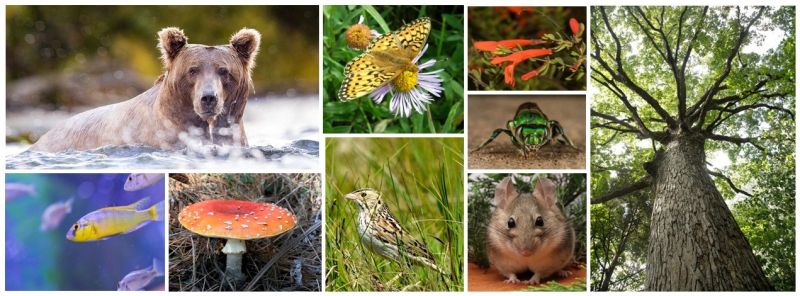
The U.S. National Science Foundation Directorate for Biological Sciences (NSF BIO) has awarded $20 million to support creation of the National Synthesis Center for Organismal Resilience (NSCORE). The center will bring together organismal biologists and computer scientists to better understand and predict organismal resilience and identify actions that can improve how organisms respond and adapt to their dynamic surroundings.
NSCORE will be led by Columbia University’s schools of Arts and Sciences and Engineering and Applied Science. The center will focus on synthesizing knowledge from a rapidly growing body of organism-derived data — from molecular to whole-organism to populations and ecosystems — to uncover the mechanisms that shape organismal resilience. In addition, NSCORE will support collaborative, open science and play a central role in education and workforce development at the nexus of biology and computation, engaging students and educators from K-12 through university.
A key goal of NSCORE is to build an interdisciplinary community of computational organismal biologists and to empower this community through the development of modern data storage and management tools for organismal data. The center will also develop and apply cutting-edge AI methods for analyzing increasingly large and complex datasets, leveraging compute capabilities from the NSF-supported National AI Research Resource and from a New York statewide consortium, Empire AI.
"NSCORE has the potential to catalyze creation of new knowledge in organismal biology via application of AI tools to existing data, as well as to change culture in organismal biology towards one of data sharing and data reuse," said Theresa Good, NSF BIO head. "NSCORE will join NSF's other Synthesis Centers in building capacity in the community to leverage advances in AI to speed discovery and innovation in the biological sciences."
Partnerships with local institutions — including New York University and affiliates of the City University of New York (City College of New York, Queens College and the Advanced Science Research Center), together with the American Museum of Natural History and the New York Botanical Garden — will provide expertise in many areas of organismal biology, ecology and evolution. International partners at the Max Planck Institute of Animal Behavior in Germany and Academica Sinica’s Biodiversity Research Center in Taiwan, with support from industry colleagues at NVIDIA and Amazon Web Services, will bolster the use of AI for analyzing a range of organismal data.
NSF BIO has previously supported several Synthesis Centers focusing on biological sciences and the intersection of biology and other fields, including AI. Current centers are the Environmental Data Science Innovation & Impact Lab and the National Synthesis Center for Emergence in the Molecular and Cellular Sciences. Synthesis Centers do not directly support generation of new data but rather are dedicated to facilitating the integration and synthesis of available data by multidisciplinary research teams to address compelling scientific questions. The focus on using AI tools and existing data to advance scientific discovery and foundational research supports the Genesis Mission, a dedicated, coordinated national effort to accelerate the application of AI for transformative scientific discovery, focused on pressing national science and technology challenges.