




NSF BIO congratulates winners of the 2026 Nobel Prize in Physiology or Medicine
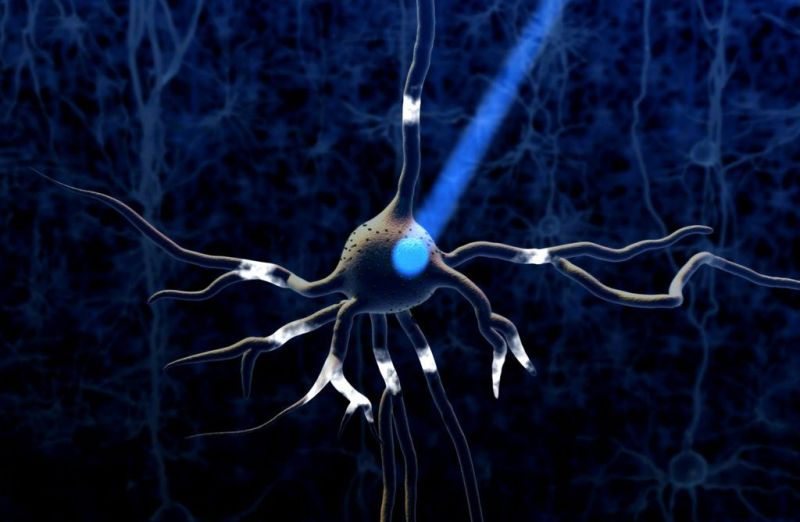
The U.S. National Science Foundation Directorate for Biological Sciences (NSF BIO) congratulates Karl Deisseroth (Stanford University), Peter Hegemann (Humboldt University of Berlin), and Georg Nagel (University of Würzburg, Germany) on being awarded the 2026 Nobel Prize in Physiology or Medicine. Their "discoveries concerning light-gated ion channels and optogenetics" revolutionized neuroscience. Optogenetics is a technique that uses light to control the activity of specifically engineered cells, allowing researchers to investigate how neural circuits influence behavior, emotions, memories, and other brain functions. Hegemann and Nagel discovered a protein called channelrhodopsin from the single-celled green alga, Chlamydomonas. Deisseroth inserted the algal protein into mammalian brain cells in living animals, making a light-controlled switch for the brain. This opened the doors for studying how the brain regulates actions, feelings, behaviors, memories, and more.
Deisseroth's work to build out the capabilities of optogenetics for control of neurons and behavior was funded by two single-investigator awards from NSF BIO. BIO also provided support for a collaborative team led by Deisseroth through the NSF Next Generation Networks for Neurosciences (NeuroNex) program. Collectively, the work developed and disseminated a suite of light-controlled tools for exciting and inhibiting neurons, mapping neural circuits, and probing neural control of cellular, physiological, and behavioral control of these neural circuits. A hallmark of Deisseroth's work was his commitment to ensuring that the fruits of his labor— tools, technologies, and data— were disseminated to the broad neuroscience community. This helped ensure that optogenetic approaches could be widely applied for diverse types of studies across many animal models.
Today, optogenetics enables researchers to directly manipulate neural circuits, revealing how the brain controls behavior. Optogenetics has also been used to map nerve cell functions that operate outside the brain, for example, control of the cardio-respiratory and gastrointestinal systems. The technology shows promise for real-world clinical treatment of human disorders, such as progressive vision loss due to retinitis pigmentosa, seizures due to epilepsy, and peripheral nerve damage due to spinal cord injuries.