



Making quantum computers resilient to adversarial attacks
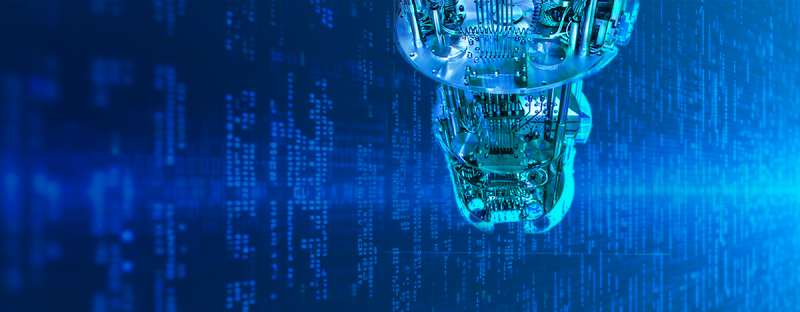
Quantum computers promise to push beyond the limits of today's machines, accelerating progress in areas such as medicine discovery, materials science and secure computing. While classical computers and artificial intelligence-powered systems already support innovation in drug development and help manage critical infrastructure, for example, quantum computing could dramatically expand what is possible by tackling certain problems far more efficiently. However, a major challenge remains: noise — any disturbance, whether from a hardware glitch, lab mistake or even a deliberate attack — that can disrupt delicate quantum information.
To address this challenge, a collaborative team at Rice University and Johns Hopkins University, backed by several U.S. National Science Foundation grants, including NSF 2339116, NSF 2243659 and NSF 2528780, developed new algorithms within a common framework that help quantum computers keep working even when noise is present. Researchers call this framework the "adversarial state corruption model", which assumes that an attacker can tamper with part of a quantum system's measurements. By designing algorithms with this threat model in mind, the researchers aimed to test how resilient quantum systems can be under realistic and even hostile conditions.
While these algorithms need further testing before they can be deployed at full scale, they already show strong promise for near-term, small-scale quantum systems, especially as improved algorithms are developed. As quantum technology moves from theory into real hardware, companies working with superconducting circuits, trapped ions and photonic systems could be the first to benefit. By strengthening the reliability and security of these emerging systems, the research directly supports national priorities in quantum technology, cybersecurity and advanced computing research, while also training a skilled workforce prepared to operate at the frontier of quantum innovation.
The team also identified important limits on what quantum systems can learn reliably. They found that while many useful quantum states remain stable even when some data is corrupted, extremely complex or disordered states can be disrupted by even a small amount of interference. One example is the maximally mixed state, which behaves like pure noise and is nearly impossible to learn accurately under adversarial conditions. By contrast, well-structured states, such as those used in quantum algorithms for factoring large numbers or searching large databases, can be learned robustly and efficiently. Together, these results help set realistic expectations: Quantum systems will not be perfect, but researchers can identify where they perform reliably and where they need protection.
This research carries important benefits for science and technology. Quantum computers may eventually crack today's advanced encryption methods, so researchers must ensure that the machines themselves resist tampering. By clearly identifying the strengths and limits, the approach also builds trust, helping prevent hype and guiding investment decisions. The work also supports progress across disciplines by training students who combine skills in quantum physics and advanced statistics, creating a new generation of experts capable of carrying this field forward.
Although the work remains in its early stages, it marks an important step toward quantum systems that operate dependably, securely and in service of American needs, from national defense to health care and beyond.