



NRT research and innovation: Quantum information science and technology
Investing in our future quantum workforce
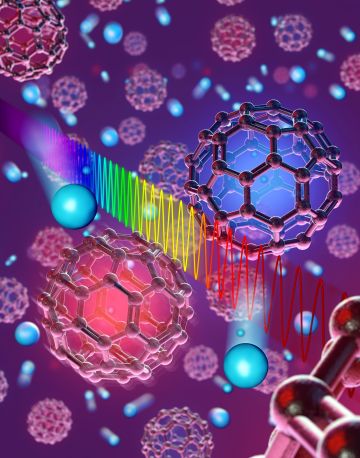
As part of its commitment to advancing quantum information science and technology, the U.S. National Science Foundation Research Traineeship (NRT) Program is supporting a range of cutting-edge projects focused on expanding our country's quantum workforce. These innovative NRTs are preparing a new wave of scientists to unearth the promise of the quantum revolution.
Read about three projects working to explore and harness the power of quantum technology:
Quantum Engineering NRT at Colorado School of Mines, in partnership with San José State University
After founding one of the country's first graduate programs in quantum engineering, the Colorado School of Mines (Mines) is leveraging their NRT to take quantum technology graduate-level education to the next level. In partnership with San José State University, Mines is providing diverse STEM graduate students with innovative interdisciplinary research opportunities to become leaders in the QISE workforce. Trainees engage with a comprehensive curriculum in quantum computing and take part in hands-on research at key national labs with industry partners like Google and IBM. Through this work, Mines is pioneering a model for QISE graduate education that will ultimately be accessible to a wide range of institutions and students across the country.
Accelerating Quantum-Enabled Technologies, University of Washington
Accelerating Quantum-Enabled Technologies (AQET) at the University of Washington brings together faculty expertise in physics to chemistry, computer science and engineering to provide graduate students with cutting-edge training. Following a "learn, practice, apply" approach, trainees take part in foundational and interdisciplinary courses followed by a team capstone project focusing on real-world applications. Working with partners like IBM and Pacific Northwest National Laboratory, AQET is one of the first programs to connect hardware and software scientists and engineers to explore the power of quantum technologies.
https://www.quantumx.washington.edu/aqet-fellow-qa-with-i-tung-chen-exploring-quantum-engineering/
AQET brings together graduate students interested in quantum information science. These students are studying physics, electrical & computer engineering, computer science, materials science & engineering and more. AQET offers courses to bridge the knowledge between different fields of research and provides an environment for students to learn from each other and work together. During these classes, I can work with students from different research groups, and the connections that we formed during the classes allow me to access research tools that I wouldn't be able to otherwise. This helped me with my experiments and opened new possibilities in my research.
I-Tung Chen
AQET Fellow/Trainee
Quantum Networks Training and Research Alliance, University of Georgia and University of Tennessee, Knoxville
Collaboration and innovation are driving a unique partnership between the University of Georgia and the University of Tennessee, Knoxville focused on harnessing the quantum revolution. Together these two prominent research institutions are building the Quantum Networks Training and Research Alliance in the Southeast (QuaNTRASE), offering cutting-edge, transdisciplinary training to a new generation of scientists with deep knowledge of quantum technologies. As part of its efforts to support a quantum-ready workforce, QuaNTRASE prepares trainees to explore complex research questions while creating powerful opportunities for historically marginalized student populations. In addition to foundational courses, training includes cross-institutional and interdisciplinary advising and mentoring focusing not only on academic research but on creating community, particularly among first-generation STEM graduate students and minority and female students. As UT STEM Education Professor Mehmet Aydeniz shared, "Preparing future generations for jobs in the quantum and AI fields is a national priority. We aim to prepare the scientists and engineers of the future who will be instrumental to the nation's leadership in science and quantum computing specifically."