





Fueling a resilient energy future
The NSF Future Use of Energy in Louisiana (FUEL) Engine, led by Louisiana State University, is advancing technologies that improve the efficiency and economic competitiveness of energy operations, while expanding regional economic opportunity.
Building on the state's longstanding expertise in oil, gas and industrial infrastructure, the NSF FUEL Engine has assembled an ecosystem of more than 50 partners across universities, industry, government and the workforce, united around a shared goal of making Louisiana a global leader in next-generation energy solutions.
Technologies of focus include:
- Carbon utilization methods that convert emissions into products such as chemicals, fuels and building materials used in the energy sector.
- Hydrogen production, transport and end-use technologies that leverage Louisiana's geology and pipeline infrastructure to support low-emission feedstocks and fuels.
- Next-generation water management systems that reduce water use, improve treatment and protect water resources across energy and hydrogen production systems.
- Structural integrity and advanced manufacturing technologies that improve the performance and durability of industrial and energy infrastructure.
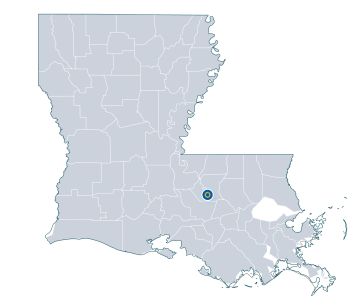 Region of service
The NSF FUEL Engine's network spans the state of Louisiana, which is home to one of the largest concentrations of oil and gas production, petrochemical manufacturing and energy export infrastructure in the United States. The energy sector is a major driver of the state's economy and supports tens of thousands of jobs statewide.
Addressing challenges in a key U.S. sector
The global energy market already favors domestic suppliers that are equipped to increase production while managing carbon emissions. The United States can grow this competitive advantage through innovative energy solutions to remain globally dominant amid shifting industry priorities.
The NSF FUEL Engine is addressing this challenge by accelerating next-generation energy technologies from lab to market, while cultivating a workforce to fill the more than 2,000 jobs projected to come to the region by 2028.
Workforce development: Building Louisiana's energy talent pipelines
As companies scale and new energy technologies move closer to market, the NSF FUEL Engine is working to ensure the resulting jobs and economic opportunities remain rooted in Louisiana.
These efforts include:
- A commitment of more than $1 million to expand workforce development programs that support STEM education and work-based learning opportunities aligned with Louisiana's energy and manufacturing sectors.
- Partnerships with community and technical colleges to modernize curricula and expand stackable credentials for emerging energy technologies.
- Programs to expand early exposure to energy careers through hands-on learning, including youth education events with the Louisiana Department of Energy and Natural Resources and the Louisiana Arts and Science Museum.
- A partnership with experiential learning venture TRC XRto create a virtual reality module that introduces secondary and college students in the region to future job opportunities, key skills required and training opportunities.
Examples of recent impact
In just two years, the NSF FUEL Engine generated an estimated $700 million impact on the regional economy through research and development and private capital investments in FUEL Engine-affiliated startups.
- Advanced next-generation energy and chemical manufacturing technologies through more than 16 startups within the NSF FUEL Engine ecosystem.
- Launched 10 new use-inspired research projects to accelerate solutions that strengthen the U.S. energy sector.
- Established 26 cross-sector workforce partnerships to strengthen the state's energy talent pipeline and align education, training and industry needs.
- Catalyzed nearly $50 million in non-federal innovation infrastructure investments.
Additional information
Lead organization: Louisiana State University
Region of service: Louisiana (entire state)
NSF awards: NSF-2315727
Key technology areas
Advanced Manufacturing, Energy Technology