




Decoding plant genomes
For decades, NSF has funded foundational work to map plant genomes, enabling a fundamental understanding of how plants grow and respond to their environment and paving the way for better crops. Examples include:
The roots of plant genomics research
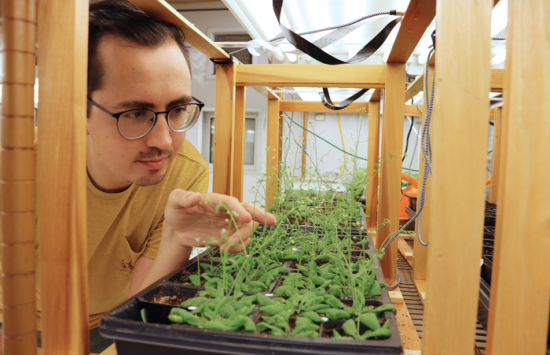
NSF was a major funder of an initiative launched in 1990 to sequence the genome of Arabidopsis thaliana, a small plant from the mustard family that has long been used in plant research. A decade later, the initiative delivered a landmark achievement: the first complete genome of any plant.
With the Arabidopsis genome in hand, researchers could now map genes governing key traits, accelerating the development of crops with better yields, disease resistance and cold tolerance.
Arabidopsis thaliana, also known as thale cress, is widely used as a model system — an organism used to study similar processes in other organisms — in plant biology.
The plant serves as a useful model because it is closely related to crops like turnips, cabbage, broccoli and canola and mimics systems in other plants like corn; is easy to care for; has a small genome with limited complexity; and has a fast life cycle that allows researchers to quickly observe the impact of their experiments.
Other model systems include yeast, fruit flies, mice and nematodes.
An a-maize-ingly large genome
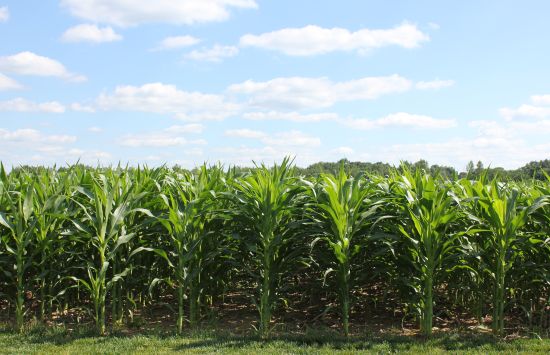
In 2009, just five years after the Arabidopsis genome was published, researchers produced the sequence for maize/corn, whose genome is roughly 18 times as large. The effort was funded by a collaboration between NSF, the U.S. Department of Energy and the U.S. Department of Agriculture (USDA) under the National Plant Genome Initiative.
Better sequences for that line of corn would later be created by NSF-funded researchers in 2013 and 2016. NSF-funded researchers have also assembled genomes for diverse forms of maize, producing 26 of them in 2021. This information presents a valuable resource for corn farmers — who contribute an estimated $20 billion to the U.S. gross domestic product annually — as well as for researchers who use corn as a model crop for understanding other agricultural plants.
The DNA of your denim
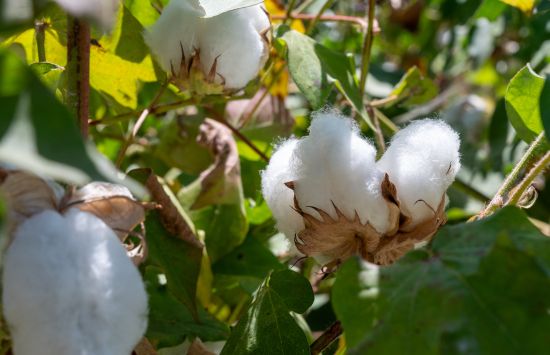
NSF's investments beginning in the 1990s enabled the first cotton genome sequence in 2012 and an improved sequence in 2017 of Upland cotton, the species that provides over 90% of the world's cotton fiber. High-quality annotated sequences for Upland and other cotton varieties were produced by NSF-funded researchers in 2020.
These sequences are a game changer for the cotton industry (which also supported the work and whose fiber and seed oil production contribute billions of dollars annually to the U.S. economy) and have accelerated the development of cotton varieties with better drought tolerance, fiber quality and yields.
A high-value sequence, no matter how you pronounce it
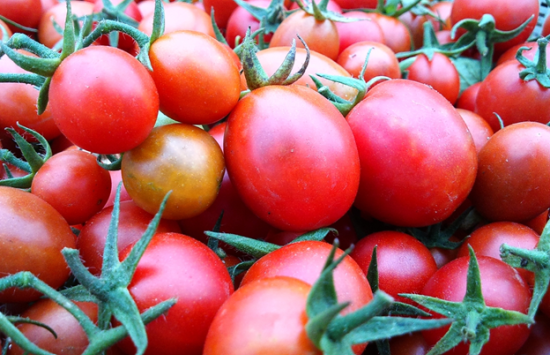
In 2004, NSF supported work that led to the 2012 publication of the first full genome sequence of the tomato, one of the world's highest-value crops and the second most consumed vegetable in the U.S. behind the potato.
This sequence provides insight into genes that control economically important traits, enabling the development of varieties that can produce high yields under harsh conditions such as heat and drought. NSF-funded researchers also created genomes of wild ancestors of tomatoes, aiding in identifying helpful genes lost through domestication.

Growing the number of genomes
NSF-funded researchers have also sequenced the genomes of other crops and agricultural products, including basmati rice, soybeans, coffee, peanuts, chia, grapes, chickpeas and avocados.
Breeding better crops
NSF has long supported research aimed at creating crops that can thrive even in challenging-to-grow conditions, including:
Drought-tolerant corn
In 2004, NSF-supported researchers targeted an enzyme in corn responsible for producing ethylene — a hormone that can initiate leaf death in response to environmental stresses in an effort to direct resources to other parts of the plant — allowing them to engineer plants with reduced ethylene levels and increased drought tolerance.
DuPont Pioneer, a major seed company, used this work to develop drought-tolerant corn that became commercially available in 2011, allowing farmers to obtain higher yields in dry conditions.

Better wheat
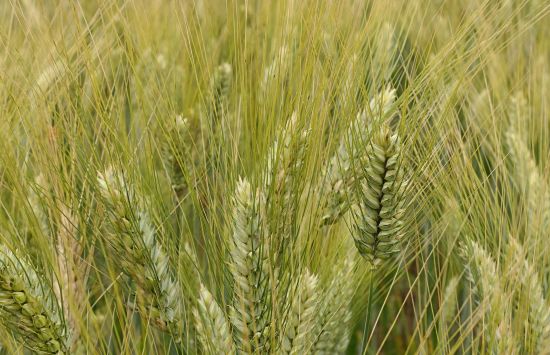
In 2013, NSF awarded funding to establish the Wheat Genetics Resource Center Industry-University Research Center (WGRC IUCRC), the world's first such public-private partnership on wheat.
WGRC IUCRC was involved in the international effort led by the International Wheat Genome Sequencing Consortium to produce the first annotated reference genome sequence of wheat, paving the way for breeders and farmers to produce low-cost, disease-resistant, high-yielding wheat varieties. With wheat accounting for approximately 20% of calories and protein consumed worldwide, these breakthroughs are key for achieving food security.

Seeding innovation
America's Seed Fund, powered by NSF, supports startups working to develop cost-effective, bio-based solutions to protect crops from pathogens and pests, including:
- NSF's investments since 2020 have helped Innatrix Inc. develop protein-based biopesticides to control untreatable and economically important crop pathogens. Innatrix has secured partnerships with large chemical companies, including Bayer CropScience, Orion Integrated Biosciences and the Global Agricultural Development Corporation.
- Supported by NSF since 2020, Pheronym Inc. is working to commercialize technology that uses pheromones to attract nematodes — microscopic roundworms that parasitize insects — to control populations of target insect pests.
Search for other startups working in this space on seedfund.nsf.gov.
Advancing farming technologies
NSF's continued investments are helping researchers incorporate new digital technologies into crop improvement programs. For example, the NSF AgTech Engine in North Dakota is incorporating advanced genomics data into on-farm sensors to optimize crop management and improve crop growth.
Through a partnership between NSF and the USDA National Institute of Food and Agriculture, the AI Institute for Resilient Agriculture is revolutionizing plant breeding by using digital twins — virtual simulations that mimic real-world crops and farms — to collect detailed information on plant growth and development to help improve crop varieties and boost production.
Such investments drive U.S. leadership in new technologies, strengthen agricultural resilience and food security and fuel economic growth.
