




What is geothermal energy?
Geothermal energy comes from the natural heat in rocks and fluids beneath the Earth's surface. Wells are drilled into the earth to pump hot water or steam to the surface, where it is used for heating or converted to electricity.
Historically, the use of geothermal energy has been limited to areas where hot water flowed near the Earth's surface, such as volcanically active areas. Today, newer technologies are used to harness this energy from much deeper in the Earth's crust, making it possible to implement geothermal energy systems almost anywhere.
Engineers have found several ways to generate and use geothermal energy, including:
- Direct use systems: These systems draw moderately hot (100–300°F) water from Earth's shallow subsurface to directly heat homes and buildings or for industrial applications such as heating the air for drying food and timber.
- Geothermal heat pumps: Also called ground-source heat pumps, these heat and cool buildings by taking advantage of the constant year-round temperature of about 50°F just a few feet below the Earth's surface. Geothermal heat pumps transfer heat from the ground into buildings during winter and from buildings into the ground during summer.
- Electricity generation: Hot water (>250°F) is brought to the surface and converted to steam. This steam is used to drive turbines that produce electricity.

Credit: Alice Kitterman / U.S. National Science Foundation
An early start
In the early 1970s, when the oil crisis indicated a need for domestic energy sources, Congress authorized NSF to serve as the lead agency on federal geothermal research and development efforts. U.S. geothermal capacity expanded from 500 megawatts in 1975 to 3 gigawatts by 1990 — a sixfold increase — driven in part by NSF support for some of the earliest geothermal projects, including:
The Stanford Geothermal Program
The program was initiated by NSF in 1972 and transferred to the U.S. Department of Energy (DOE) after the agency was established in 1977. The program enabled the first simulations of geothermal reservoir performance. These simulations were instrumental in helping the geothermal industry make better development decisions and improve energy recovery.
Since 1975, the Stanford Geothermal Program has hosted an annual workshop bringing researchers and industry together to share innovative ideas that have been key to advancing the geothermal industry. Many of its graduates are now geothermal industry leaders.
The Hawaii Geothermal Project
This project began in 1973 to determine the feasibility of extracting usable energy from Hawaii's volcanic systems. The project drilled a productive well on the island of Hawaii — initially intended as a two-year demonstration project — that produced commercial electricity for nearly eight years.
In addition to demonstrating the economic feasibility of geothermal electricity production, the Hawai’i Geothermal Project produced a wealth of information on its operational requirements, providing valuable guidance for the geothermal industry as it looked to further develop commercial geothermal systems.
Currently, the island of Hawaii receives around 14% of its electricity from geothermal energy, and researchers are exploring the potential for geothermal development across the island chain.

Credit: USGS
Heating up the geothermal sector
NSF investments in multisector partnerships have been instrumental in improving and scaling geothermal energy extraction. Examples include:

Credit: Алексей Мараховец - stock.adobe.com
Iceland Deep Drilling Project
In 2005, NSF joined the Iceland Deep Drilling Project to determine the economic feasibility of extracting energy from "supercritical" water — superhot (~705 F) water at high pressure located thousands of feet below the Earth's surface.
Geothermal energy from supercritical water has the potential to be more economically profitable because it generates up to ten times more power than conventional geothermal steam.
The operation drilled to a depth previously unexplored (over 15,000 feet deep) providing valuable insights into supercritical conditions. This project set the stage for supercritical geothermal exploration in other areas, including the Newberry Volcano in central Oregon.

Credit: U.S. Department of Energy
NSF Sedheat Research Coordination Network
Sedimentary basins — low areas in the Earth's crust where sediments accumulate — lie under roughly half of the U.S. Because these basins store large geothermal reservoirs at relatively easy drilling depths, they offer a promising path to expanding the nation's commercial geothermal energy production.
In the 2010s, the NSF Sedheat Research Coordination Network brought together interdisciplinary partners from academia, government and industry to explore the potential for geothermal energy from sedimentary basins. SedHeat documented the distribution and quantity of the U.S. sedimentary geothermal energy supply and found practical methods for extracting it and converting it to electricity, demonstrating the economic feasibility of extracting energy from this vast resource.
Addressing challenges, realizing potential
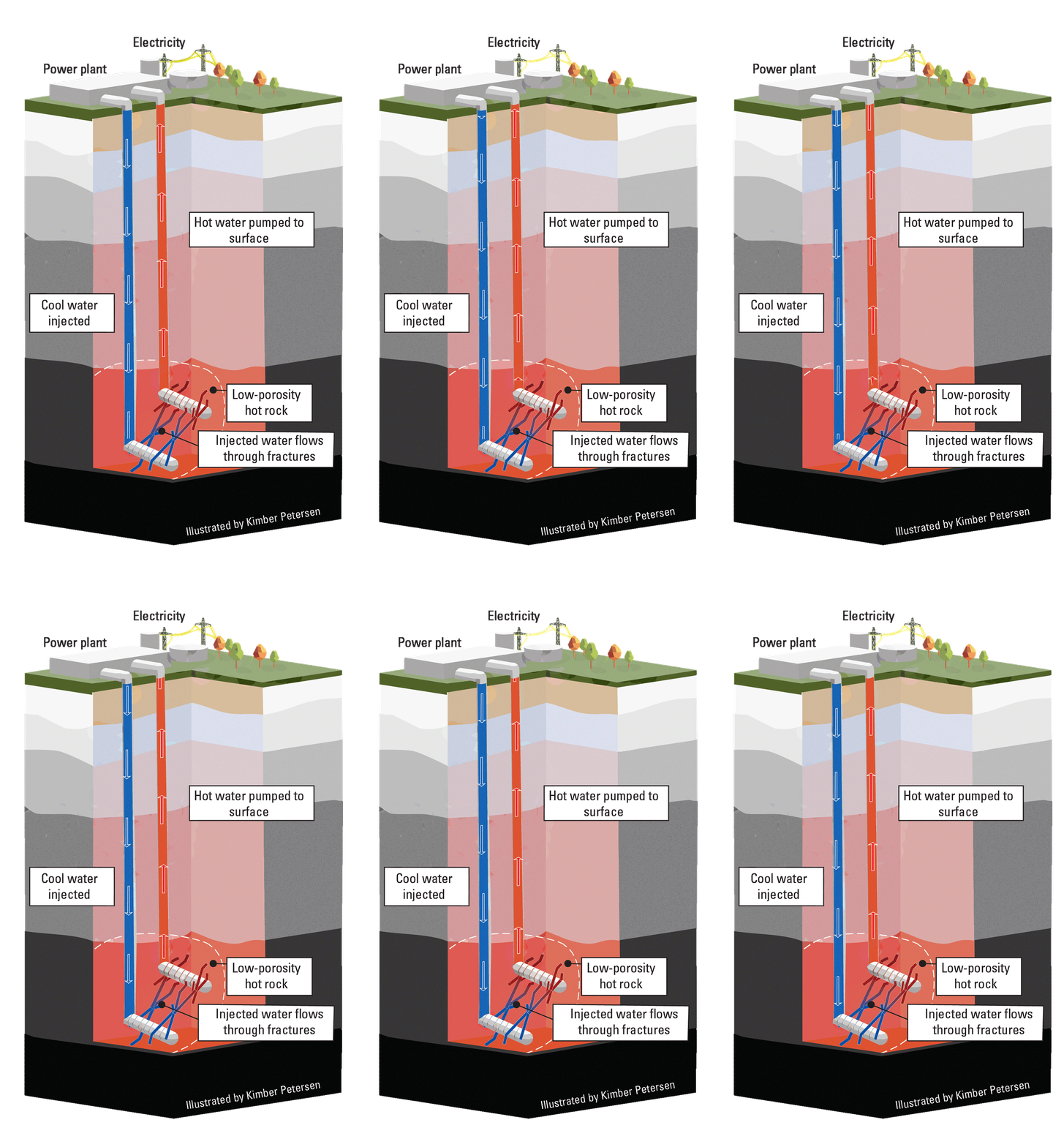
Enhanced geothermal systems (EGS) are a next-generation technology that circulate fluids through engineered fracture systems in deep rock to bring heat to the surface. By enabling energy extraction from deeper, hotter and less permeable rock than conventional geothermal systems, EGS increase the availability and quality of geothermal resources.
However, creating fractures in EGS can cause small earthquakes. To help address this risk, researchers at the Center for Geomechanics and Mitigation of Geohazards, which was established through the NSF Industry-University Cooperative Research Center program, have modeled the belowground pressure changes around geothermal reservoirs to better understand the physical processes that induce earthquakes and improve the safety of EGS. Other researchers are using data from the NSF National Geophysical Facility to develop recommendations, tailored to local geologies, for engineering and managing EGS to mitigate induced earthquake risk.
A robust workforce for a growing industry
NSF continues to bolster the geothermal industry, helping the U.S. realize the full potential and economic benefits of its vast geothermal resources. The Geothermal INTERN program, a partnership between NSF and DOE, coordinates internships for students nationwide to provide real-world training in the geothermal sector. With the U.S. geothermal energy market valued at over $2 billion and growing, this program provides an entryway into an exciting, stable job market and ensures the U.S. has the skilled workforce needed to advance geothermal technologies and bring them to the power grid. Such investments are helping to secure a reliable energy future and lower energy costs, bolstering national security, driving economic growth and improving quality of life.

Credit: BLM New Mexico