



2026 Nobel Prize in physics awarded for NSF IceCube neutrino discoveries
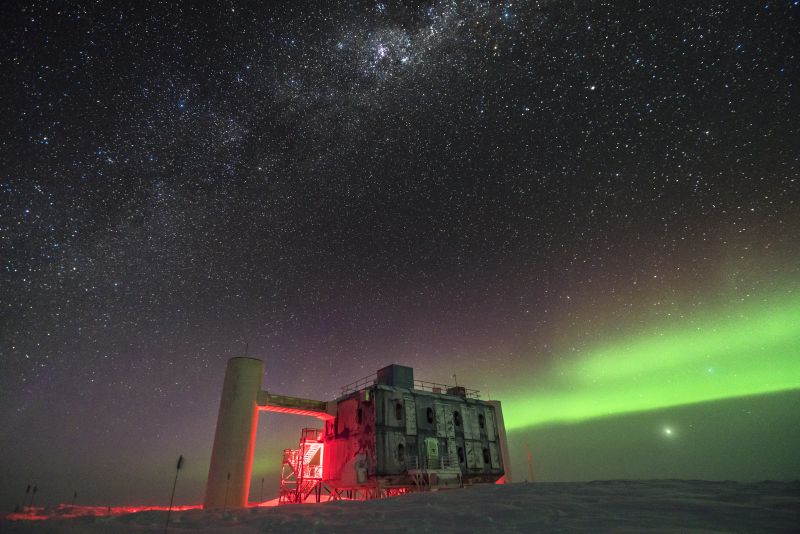
Francis Halzen was awarded the prize "for decisive contributions to the IceCube Neutrino Observatory and the discovery of high-energy neutrinos of astrophysical origin."
The U.S. National Science Foundation congratulates Francis Halzen on winning the 2026 Nobel Prize in physics for his major contributions to the NSF IceCube Neutrino Observatory and its discoveries of elusive neutrino particles that come to Earth from distant places in the universe. Over more than two decades, NSF invested in the design, construction, and ongoing operations of IceCube, which has enabled greater understanding of astrophysical neutrinos and their origins.
When it was first proposed to NSF in the 1990s, IceCube was an ambitious vision for a scientific facility unlike any other. Halzen and other scientists devised a plan to put thousands of digital detectors more than two kilometers deep in the crystal-clear ice of the South Pole, an ideal location to spot neutrinos. Oftentimes called "ghost particles," neutrinos exist in great quantities but normally pass straight through Earth undetected. Just detecting a single neutrino is a daunting challenge, but IceCube was made to detect many — and determine where they are coming from.
IceCube's construction began in 2004 at the NSF Amundsen-Scott South Pole Station with support from the NSF-managed U.S. Antarctic Program. In 2011, IceCube began operations and, two years later, published findings showing it had detected the highest-energy neutrinos ever observed. The neutrinos had more than a million times the energy of those previously detected, which provided the first evidence that neutrinos might be regularly passing through Earth from distant high-energy sources outside the solar system.
In the years since, analysis of data produced by IceCube has resulted in many more discoveries and findings that have expanded human understanding of the nature of the universe. Those findings include definitive evidence in 2018 of neutrinos coming from a supermassive black hole in another galaxy. And in 2023, IceCube produced the first-ever neutrino-based image of the Milky Way. Many of these results were made possible by NSF high-performance computing facilities that scientists used to crunch vast amounts of data from IceCube and run simulations that helped them interpret the measurements with greater accuracy.
"Foundational science and discovery requires extraordinary human grit from the dedicated engineers, instrument builders, and field crews who constructed and continue to operate a massive observatory a mile beneath the Antarctic ice," says Brian Stone, performing the duties of the NSF Director. "NSF is proud to support the IceCube collaboration and every individual in the U.S. Antarctic Program who helped turn this daring vision into reality."
NSF supports cutting-edge research facilities and instruments to explore nature in ways that would otherwise not be possible.
Learn more about NSF IceCube and other physical science research facilities