




To improve landslide predictions, look deeper beneath the surface
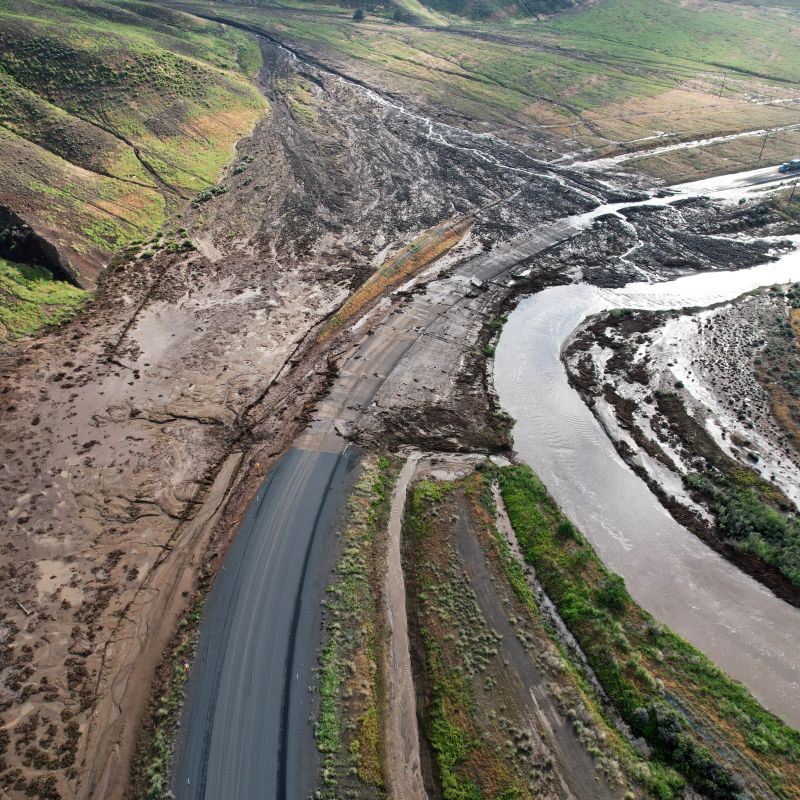
A team of U.S. National Science Foundation-supported researchers found that the rock layers beneath soil help control how groundwater moves across hillsides during storms, impacting when and where shallow landslides begin.
Shallow landslides pose significant, often underrecognized hazards, capable of causing sudden damage to homes, roads and critical infrastructure. These events can be triggered by increasingly common factors, such as intense rainfall, wildfire and land development.
Previous research explored how rainfall destabilizes soils during shallow landslides. In this new study, researchers looked deeper beneath the surface, characterizing how subsurface layers store groundwater, redirect it downslope and sometimes force it back upward into the soil. These findings improve the ability to predict landslide susceptibility, strengthen early warnings and inform hazard preparedness, helping protect lives, reduce economic losses and guide safer land-use decisions.
What lies beneath
The team focused on a well-studied site near Coos Bay, Oregon. Previous research provided extensive characterization of soil, bedrock and landslides, along with rare, instrumented observations of landslide initiation timing.
They found that the critical zone — the layer of Earth that extends from the soil through weathered rock to deeper bedrock — can impact where shallow landslides occur, how large they become and when they are triggered. Using a framework that integrated numerical models of deep critical zone structures, hydrology and slope stability at a watershed scale, the researchers identified distinct patterns.
In areas with deeper layers of weathered rock, groundwater moves farther below the surface before reemerging downslope. This reduces pressure build-up in surface soils but can create localized zones of instability where the weathered bedrock thins near channels and hollows. These conditions could be linked to more localized landslides near the base of hillsides. In contrast, areas without deeper layers of weathered rock allow water to stay in the soil, causing larger, more widespread landslides across slopes that are more likely to occur earlier in a storm.
Differences beneath the surface help explain why similar-looking hillsides can respond so differently to the same storm.