
Light at the bottom of the world
An NSF-supported research cruise explored how animals see, signal, and survive at hydrothermal vents, where the only light may be infrared
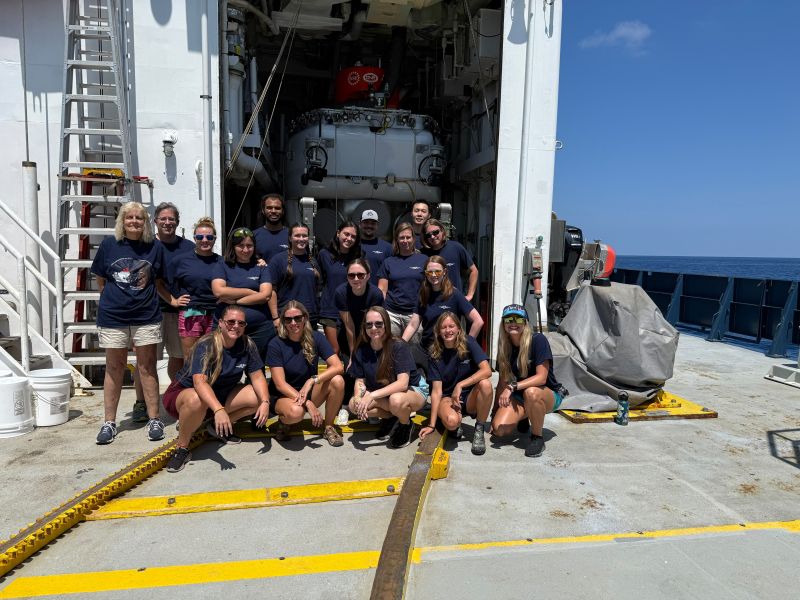
A U.S. National Science Foundation-supported research cruise helped advance fundamental knowledge on how senses evolve.
Discoveries from deep-sea organisms can inspire transformative bioinspired solutions with applications well beyond the marine environment. In particular, uncovering how deep-sea animals detect and use even the faintest traces of light could pave the way for innovations in ultra-sensitive light receptors and provide biological models for next-generation low-light imaging and camera systems.
The team leading the research cruise published a StoryMap that takes readers on their journey to one of the least-explored places on the planet.
A very deep dive
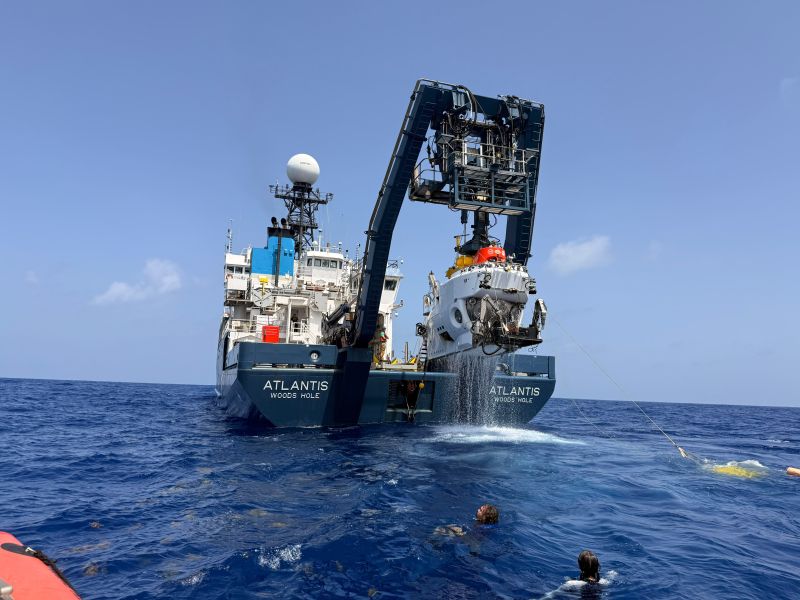
In August 2026, the researchers boarded the human-occupied submersible HOV Alvin, from the U. S. Academic Research Fleet ship R/V Atlantis. The ship held station above the Mid-Cayman Rise, near the Cayman Islands, on a mission to collect biological specimens, environmental data, and high-resolution imagery of hydrothermal vent systems on the seafloor.
As the HOV Alvin descended 2,300 meters into the ocean, the team of researchers noticed that the seemingly impenetrable darkness started to fill with pinpoints or streams of light. As they peered out the windows, the team realized the light was coming from living things: bioluminescent dinoflagellates, gelatinous animals like jellyfish, and shrimp.
 Extreme environments
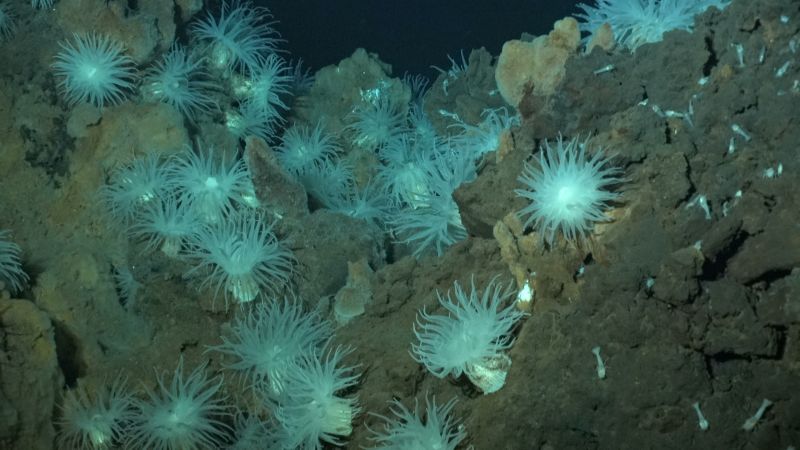
The Mid-Cayman Rise marks the spot where the North American tectonic plate is moving away from the Caribbean plate. Seawater seeps into cracks in the oceanic crust, where it becomes super-heated by underlying magma and then ascends to the seafloor as extremely hot, mineral-rich fluids. The intense pressure at these depths prevents the fluids from boiling. Instead, the dissolved minerals precipitate as they mix with the cold seawater, building towering chimneys known as "black smokers."
The hydrothermal vent fields of the Mid-Cayman Rise are among the deepest known on Earth. They also host two very different vent systems: the Von Damm vent field at 2,300 meters and the Beebe Vent Field at 5,000 meters. During the expedition, the team focused primarily on the Von Damm Vent Field to investigate deep-sea sensory biology and adaptation while also collecting samples from the deeper Beebe Vent Field for comparison.
This voyage followed the team's NSF-supported 2025 expedition to the Lucky Strike vent field on the Mid-Atlantic Ridge. The team discovered that bioluminescence was abundant in the water column above 1,000 meters at Lucky Strike, but observed little on the seafloor, similar to findings at Von Damm.
This raises an intriguing question: How do animals living in these environments use vision when so little light appears to be available? One possibility is that their visual systems are adapted to detect infrared light, including the faint emissions produced by hydrothermal vents. Testing this hypothesis could provide new insight into how vision has evolved in one of the darkest and most extreme environments on Earth.