




New technologies and data reveal hidden predator-prey interactions in the ocean
Researchers with support from the U.S. National Science Foundation published new findings demonstrating how critical technologies reveal predator-prey interactions in the ocean. The research offers new insights into how those interactions support vital coastal services and shape ocean food systems.
One research team developed a machine learning tool that can distinguish the type of prey an eagle ray is crunching on, demonstrating how the technology can operate on autonomous underwater platforms. Another research team used tagging to find that basking sharks seek prey deeper than previously thought during long-distance migrations, highlighting the role of deep-pelagic food webs.
Counting crushes
Whitespotted eagle rays are large and highly mobile predators with a reputation for crushing hard-shelled prey. Researchers developed a machine learning-based acoustic monitoring system that can detect and classify shell-crushing noises from underwater feeding recordings.
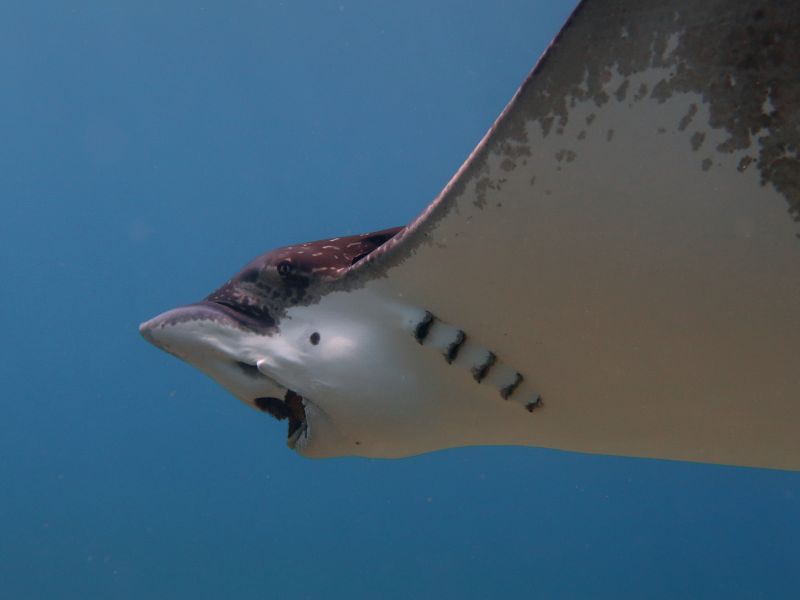
The system first scanned large datasets to flag potential shell-crushing sounds based on their acoustic patterns, then applied a second layer of machine learning to reduce false detections by separating real feeding events from background noise.
Although the researchers used this passive acoustic monitoring in a tank setting for now, the same technology will allow them to study wild feedings in areas that are otherwise difficult to observe.
The team also found that simpler computational methods performed nearly as well as advanced methods, which require much more computing power. These findings could make long-term underwater monitoring more practical, scalable and cost-effective in real marine environments.
Going deep
Basking sharks are filter feeders that filter seawater through their gills, usually consuming plankton near the ocean's surface. However, after analyzing 8,000 days of tracking data from 37 tagged basking sharks near Cape Cod, Massachusetts, researchers found that the sharks also dove to depths up to 1,000 meters below the surface for prey during their winter migrations to the Sargasso Sea and the Caribbean.
Diving into the twilight zone, which extends from 200 to 1,000 meters below the ocean surface, is physiologically demanding. Yet the tracking data showed that these sharks repeatedly plunged into an area that most other large pelagic predators cannot reach.
The research suggests that deep-sea food webs may play a vital role in supporting migratory marine species and highlights the potential ecological importance of prey living in the ocean twilight zone.
For further reading, visit the Florida Atlantic University news release and the Woods Hole Oceanographic Institution news release.