



New technology can alert drivers and pilots to hazardous ice and freezing rain conditions
Researchers supported by the U.S. National Science Foundation developed advanced sensors that can measure surface ice accumulation and estimate the likelihood of dangerous atmospheric icing conditions, boosting the nation's resilience to extreme weather.
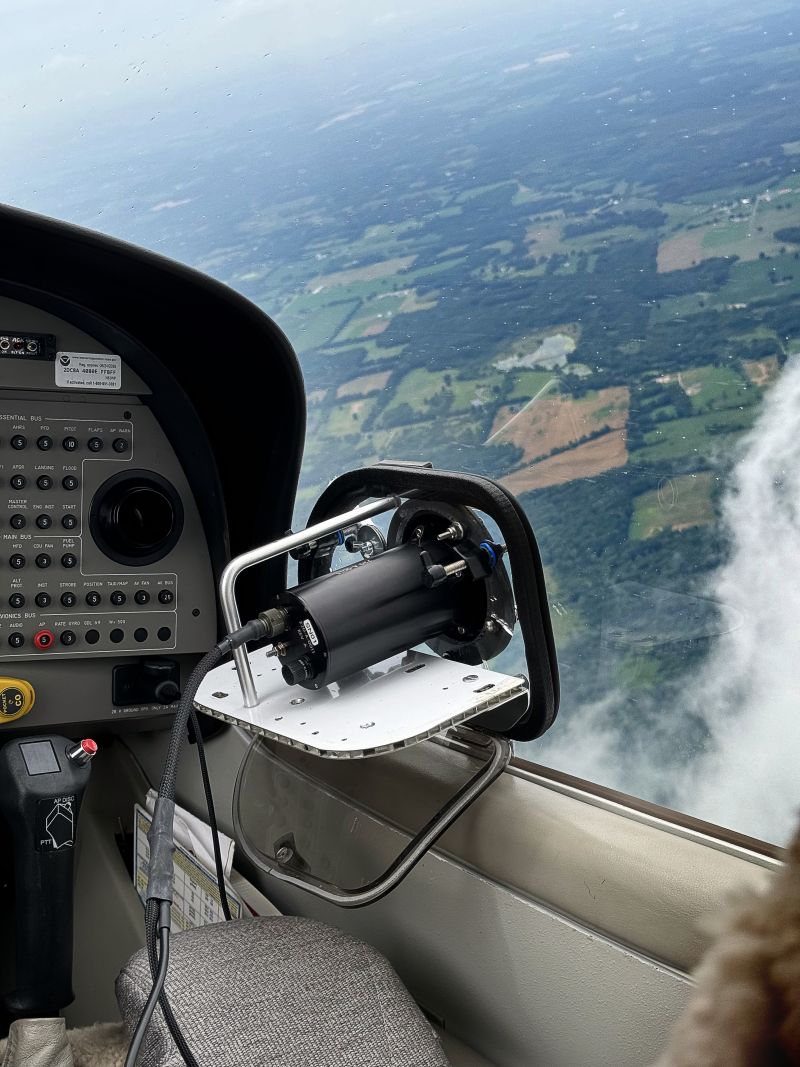
The team designed a prototype for a new icing detection system (IDS) that can, for the first time, measure liquid droplets in nearby clouds. It can also calculate droplet size and abundance around an airplane or other vehicles and determine if those droplets could lead to dangerous icing conditions.
"The most hazardous kind of ice forms in temperatures that are just below freezing and when the drops are large," said Nilton Renno, the lead author on the study and professor at the University of Michigan. "In those conditions, we detect liquid droplets in the air that freeze once they hit unprotected surfaces of an airplane, causing dangerous icing hazards."
Ice build-up on planes can interfere with aerodynamics and controls, leading to roughly 10% of all fatal air carrier crashes. Icy roads also pose public safety risks, accounting for approximately 20% of weather-related car crashes each year. Renno, a pilot himself, recognized the need for a system that can quickly detect potential icing hazards and activate safety protocols not just for airplanes, but also for trucks and other vehicles.
A new kind of sensor
Planes that are certified to fly by the Federal Aviation Administration must have icing protection systems and be able to fly long enough to safely exit the most hazardous icing conditions. The faster the system can detect icing conditions, the easier it is to certify the airplane.
Current systems estimate ice accretion in probes on the front of the aircraft, alerting the flight crew to icing conditions. The new IDS, however, can measure ice accumulation on any aircraft surface, while also calculating cloud droplet size and water content, alerting the flight crew to the hazard level. This capability enables pilots to make faster decisions, such as rerouting or adding heat to the wing to melt the ice.
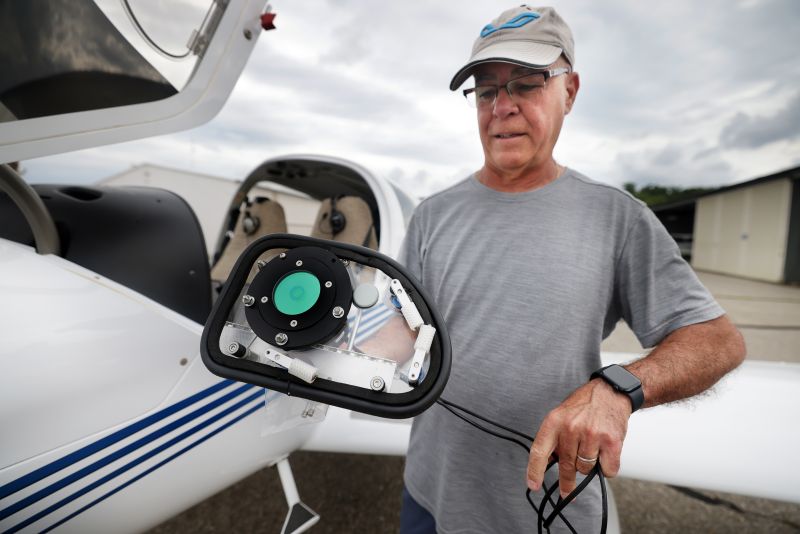
Although seemingly designed for winter weather, IDS has roots elsewhere. "We originally designed this instrument to measure water content in soils as part of a Mars mission to look for evidence of liquid water," said Renno. It was during NSF-sponsored fieldwork at Owens dry lake in California that Renno realized the new tool could accurately detect phase changes, like ice to water, spurring the idea for multiple uses.
Through multiple NSF grants, among other funding sources, the team built a database of scientific measurements and developed the aircraft device, in part at the University of Michigan Space Physics Research Laboratory. The team founded the startup company, Intelligent Vision Systems, which plans to continue refining the device and prepare it for wider adoption in partnership with a large aerospace company.
For further reading, visit the University of Michigan's news release.