



NSF renews center investigating microbial chemistry shaping the ocean's carbon cycle
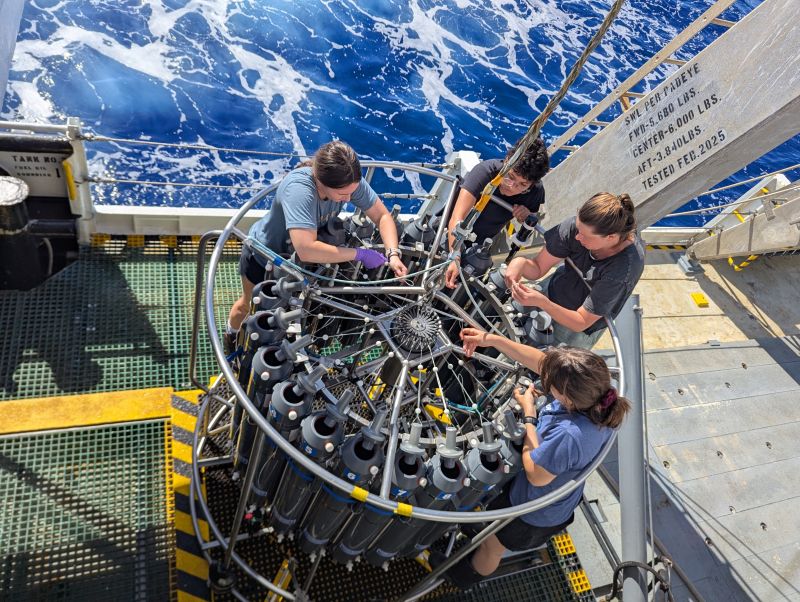
The U.S. National Science Foundation has renewed funding for the Center for Chemical Currencies of a Microbial Planet (C-CoMP) for an additional five years, extending a major interdisciplinary effort to advance fundamental understanding of ocean biogeochemistry.
Woods Hole Oceanographic Institution leads the center, which brings together researchers to investigate the chemicals that connect marine microorganisms. Microbes produce, exchange, and consume these small molecules as currency, playing a critical role in moving carbon and nutrients through ocean ecosystems and ultimately influencing the exchange of carbon between the ocean and atmosphere. Marine microbes sustain complex microbial communities, which in turn form the base of the marine food web that supports fish, whales, and fisheries.
C-CoMP was established in 2021 as one of six NSF Science and Technology Centers to advance transformative research addressing critical societal needs.
The renewal builds on the center's achievements during its first five years of NSF support and will enable researchers to further investigate how chemical-microbial networks function and respond to a changing ocean.