




Major NSF research facilities

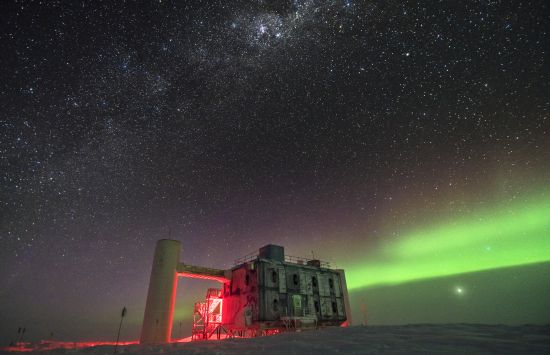
NSF IceCube Neutrino Observatory (NSF IceCube)
NSF IceCube is a grid consisting of thousands of sensors embedded in a cubic kilometer of ice deep in the Antarctic Ice Sheet that allows it to detect elusive neutrinos and determine where they came from.
In 2023, researchers used the NSF IceCube Neutrino Observatory to create a neutrino-based image of the Milky Way, the first image ever made with particles of matter rather than electromagnetic energy.
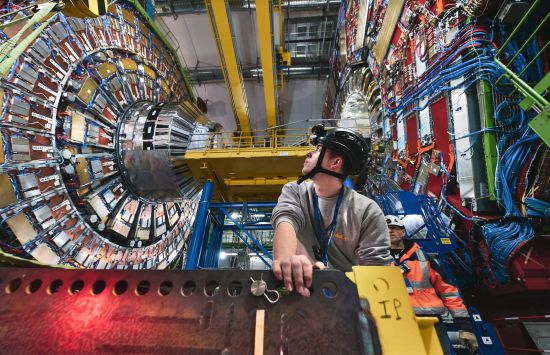
Large Hadron Collider
NSF supports two particle physics detectors — ATLAS and the Compact Muon Solenoid (CMS) — at the world's most powerful particle accelerator, the Large Hadron Collider at the European Organization for Nuclear Research (CERN) in Switzerland.
These massive detectors enable the investigation of a wide range of physical phenomena, from the Higgs boson to extra dimensions to particles that could make up dark matter.
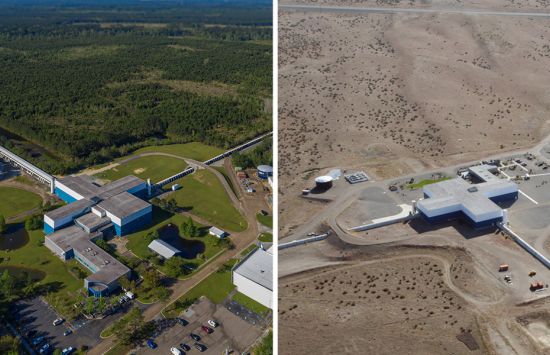
NSF Laser Interferometer Gravitational-Wave Observatory (NSF LIGO)
NSF LIGO's two multi-kilometer-scale gravitational wave detectors (located in Hanford, Washington, and Livingston, Louisiana) use laser interferometry to measure the ripples in space-time caused by gravitational waves from cosmic events such as colliding black holes.
In 2015, NSF LIGO detected gravitational waves for the first time, confirming a major prediction of Albert Einstein's 1915 general theory of relativity. Since then, NSF LIGO has detected more than 200 sources of gravitational waves across the universe.
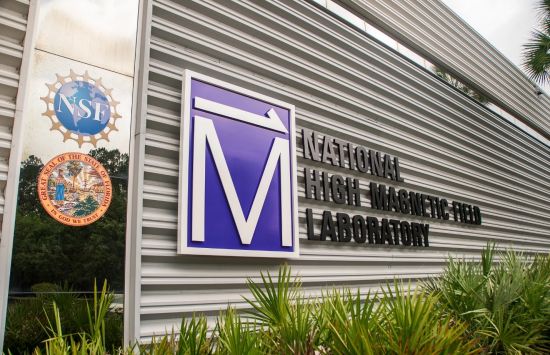
NSF National High Magnetic Field Laboratory (NSF MagLab)
NSF MagLab is the largest and highest-powered magnet laboratory in the world and is used by thousands of scientists to probe fundamental questions about materials, energy, life and the environment.
MagLab is an international leader in magnet design, development and construction, including the development of new superconducting materials. MagLab's advanced instruments are available to scientists through multiple user facilities: six in Florida and one in New Mexico.
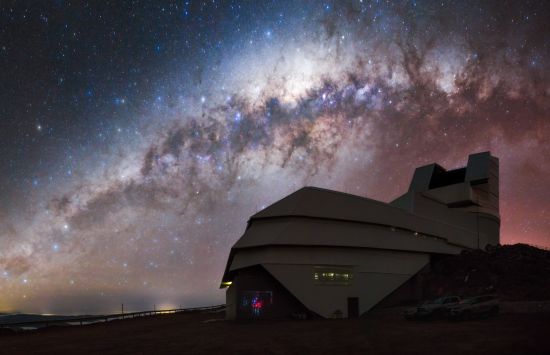
NSF National Optical-Infrared Astronomy Research Laboratory (NSF NOIRLab)
NSF NOIRLab is a Federally Funded Research and Development Center operating multiple ground-based optical and infrared astronomy facilities and telescopes that explore the universe, from asteroids in our solar system to the enigmatic nature of dark matter and dark energy. Its headquarters are in Tucson, Arizona.
NSF NOIRLab facilities:
Located in Chile, CTIO includes the NSF Víctor M. Blanco 4-meter Telescope mounted with the U.S. Department of Energy's Dark Energy Camera. CTIO also hosts multiple other telescopes with U.S. and international partners.
Learn more about the Cerro Tololo Inter-American Observatory.
The International Gemini Observatory consists of two optical/infrared 8-meter telescopes, one in each hemisphere, allowing researchers to examine the entire sky. Gemini North is in the Northern Hemisphere in Hawaii and Gemini South is in the Southern Hemisphere in Chile.
Located near Tucson, Arizona, NSF KPNO includes the NSF Nicholas U. Mayall 4-meter Telescope mounted with the U.S. Department of Energy's Dark Energy Spectroscopic Instrument. Kitt Peak also hosts the WIYN 3.5-meter Telescope, more than a dozen other telescopes and an educational center.
Located in Chile, the NSF-DOE Rubin Observatory is funded by NSF and the U.S. Department of Energy's Office of Science. Operated by NSF NOIRLab and DOE's SLAC National Accelerator Laboratory, the observatory is using the world's largest digital camera to better understand the nature of dark matter and dark energy and discover billions of astronomical objects, millions of asteroids and more.
The NSF Community Science and Data Center provides user support services, software tools and data management services for NSF NOIRLab facilities and the astronomical sciences community.
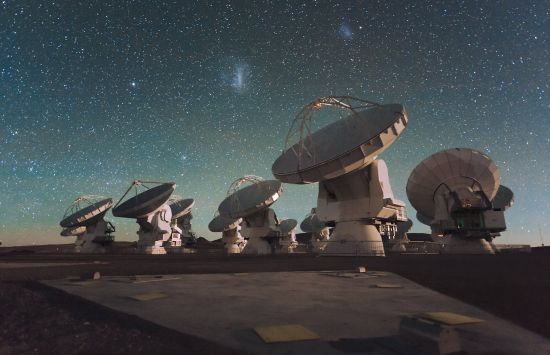
NSF National Radio Astronomy Observatory (NSF NRAO)
NSF NRAO is a Federally Funded Research and Development Center that operates, designs and builds radio telescopes used to study all types of astronomical objects, from planets in the solar system to objects in distant galaxies. Its headquarters are in Charlottesville, Virginia.
NSF NRAO facilities:
Located high in the Chilean Andes, ALMA consists of 66 high-precision radio telescopes that act as a single powerful radio telescope.
Home to the largest fully steerable, single-dish radio telescope in the world, the NSF Green Bank Observatory is located in Green Bank, West Virginia, within the National Radio Quiet Zone.
The NSF VLA is a Y-shaped array consisting of 28 25-meter radio telescopes near Socorro, New Mexico. The telescopes are on railroad tracks, so they can be repositioned for different types of observations.
The NSF VLBA is a network of 10, 25-meter radio telescopes located throughout the continental U.S., Hawaii and the U.S. Virgin Islands.
This lab develops new technology for the next generation of radio astronomy telescopes and other scientific applications that require unique radio equipment.
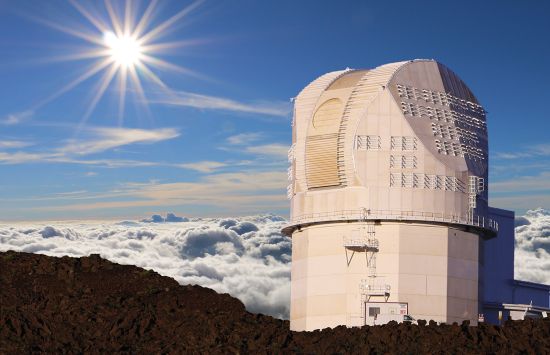
NSF National Solar Observatory (NSF NSO)
NSF NSO is a Federally Funded Research and Development Center that operates multiple ground-based telescopes focused on understanding and monitoring all aspects of the sun, both as an astronomical object and as the dominant external influence on Earth. Its headquarters are in Boulder, Colorado.
NSF NSO facilities:
This 4-meter solar telescope on Maui, Hawaii, is the largest and most advanced solar telescope ever built. The NSF Inouye Solar Telescope's unique instruments allow the solar surface and atmosphere to be explored as never before.
NSF-NOAA GONG is a worldwide network of six identical telescopes designed to observe the sun 24/7. The network serves multiple purposes, including space weather prediction.
SOLIS is comprised of three instruments used to study magnetic and non-magnetic solar activity on a continuing basis. The data is used to understand the solar activity cycle, sudden energy releases in the solar atmosphere, and solar irradiance changes.
Mid-scale NSF research facilities
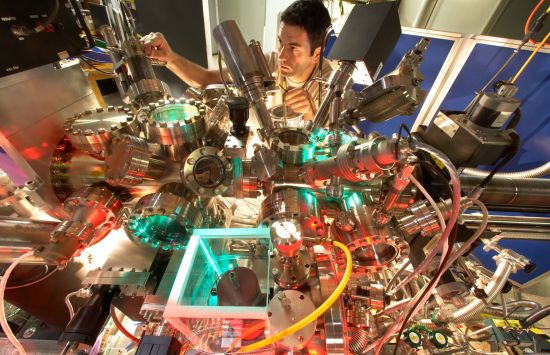
NSF Center for High-Energy X-ray Sciences (NSF CHEXS)
NSF CHEXS is located within the Cornell High Energy Synchrotron Source and provides multiple instruments and beamlines for emerging research in materials, engineering and biology. Each beamline has unique scientific capabilities.
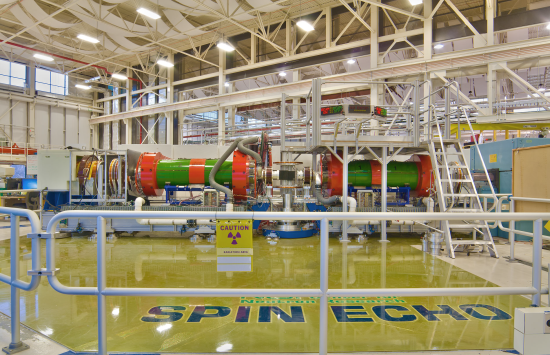
NSF Center for High Resolution Neutron Scattering (NSF CHRNS)
NSF CHRNS is located at the National Institute of Standards and Technology Center for Neutron Research and allows researchers to use neutrons, which are magnetically neutral, to explore the inner workings of polymers, metals, ceramics, biological molecules and other materials.
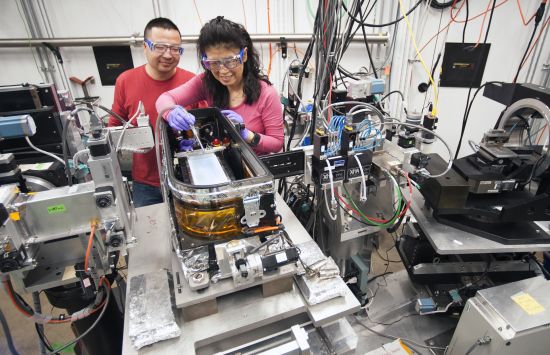
NSF Chemistry and Materials Center for Advanced Radiation Sources (NSF ChemMatCARS)
NSF ChemMatCARS is a national user facility with unique capabilities for a broad range of research activities such as the development of new energy sources, biomolecular materials, environmental remediation processes, and new materials and catalysts important for a wide range of industries.
The facility utilizes high-energy X-rays at the Advanced Photon Source located at the U.S. Department of Energy's Argonne National Laboratory.

NSF Materials Innovation Platforms
The NSF Materials Innovation Platforms are dedicated to accelerating advances in materials research. Each platform houses state-of-the-art experimental and computation tools and technologies which are made broadly available to researchers.
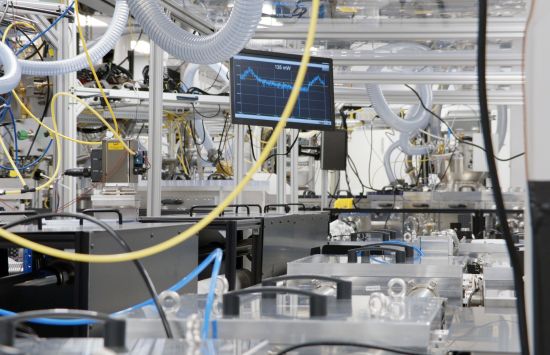
NSF National Extreme Ultrafast Science (NSF NeXUS)
NSF NeXUS provides researchers with access to a high-speed attosecond pulse laser that enables the investigation of phenomena such as the ultrafast motion inside molecules. The facility advances fundamental research in physics, chemistry and materials science.
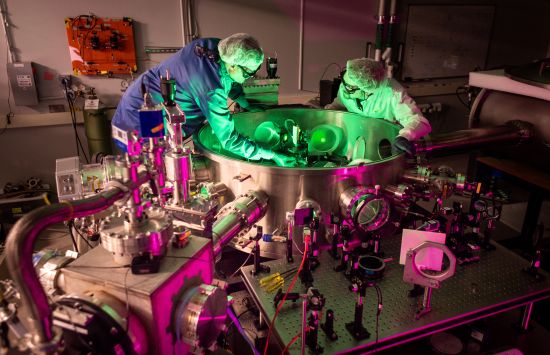
NSF Zettawatt-Equivalent Ultrashort pulse laser System (NSF ZEUS)
With roughly double the power of other U.S. lasers, the NSF ZEUS facility has the most powerful laser in the country.
NSF ZEUS is available to scientists across the U.S. for experiments in a range of fields, including quantum physics and plasma science, with potential applications in medicine, national security, materials science and more.