



Digital twins: Virtual models with real-world impacts
Researchers and engineers can use digital twins — virtual copies of real-world objects or systems like bridges, medical devices and production lines — to save time, money and effort.
The bottom line
- A digital twin is a virtual model of real-world things, like buildings, traffic networks, and human organs, that let users explore ideas in a low-risk, cost-effective way before taking action.
- They could transform the way people live and work, from city planning and health care to manufacturing and quantum technology, accelerating discovery, sparking innovation, driving economic growth and keeping the U.S. competitive.
- By investing in high-quality data, advanced algorithms and workforce training, the U.S. National Science Foundation is helping digital twins reach their full potential as reliable tools for high-stakes, real-world applications.
What are digital twins?
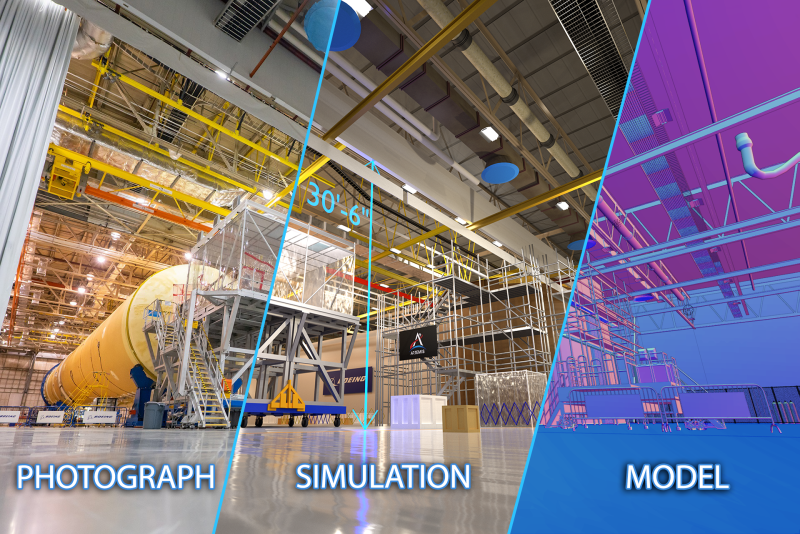
A digital twin is a detailed, virtual replica of a real-world object, system or process. It can represent almost anything: a car, a factory, a city's traffic network and even a human heart. Sensors on physical objects continuously feed information — such as temperature, pressure, movement, wear and energy demand — into the digital model, ensuring it reflects real-world conditions in real time.
Modern digital twins are interactive and bidirectional: not only do they mirror the physical system, but they can also influence it. By combining real-time data with advanced mathematical models, a digital twin can simulate performance, test designs, explore "what-if" scenarios and control the physical object — helping users make smarter decisions and even automate responses.
Why are digital twins important?
Digital twins are poised to transform how we understand, design and manage complex systems. By allowing users to test scenarios virtually before acting in the real world, digital twins save time, reduce risk and support smarter, safer decisions. Applications include:
- Testing traffic patterns, evaluating urban layout and planning energy or water distribution in cities.
- Monitoring factory operations to identify vulnerabilities, resolve bottlenecks and optimize productivity without halting production.
- Assessing the safety, durability and energy efficiency of structures like bridges, buildings and aircraft under different conditions.
- Personalizing medical treatments and streamlining clinical trials for safer drug and device development.
- Simulating high-risk or expensive experiments, such as particle collisions, fluid dynamics or materials under extreme conditions.
What opportunities remain?
While digital twins hold great promise, key challenges remain. The complex calculations involved in their use require better algorithms and mathematical models to handle massive datasets efficiently.
Equally important is data — it must be high-quality, synchronized and standardized, while also being protected against cybersecurity and privacy risks.
Building and maintaining these systems can also be costly, and there is a shortage of skilled professionals to develop and manage them.
NSF's investments in digital twins
Laying the groundwork
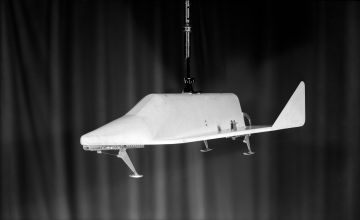
The concept of a digital twin is rooted in the 1960s, when NASA built physical replicas of spacecraft to study how they might perform under different scenarios before actual missions. Today's digital twins build on that legacy, powered by decades of research and innovation, much of it supported by the NSF.
Since the late 1950s, NSF investments in fundamental mathematics — including numerical analysis, partial differential equations, optimization, linear algebra, statistics and scientific computing — have laid the groundwork for modeling complex, dynamic systems with remarkable precision. These advances underpin every aspect of modern digital twin technology, from modeling physical behavior to interpreting massive streams of real-time data.
Taking digital twins into the future
From city streets to hospitals to critical infrastructure, NSF-supported research is expanding the reach of digital twins, making virtual models more powerful, reliable and practical.
Digital twins have the potential to improve everyday life and urban systems. NSF-supported researchers are developing "hybrid twins" that combine traffic simulations with real-time observations to optimize traffic flow, support city planners and coordinate traffic signals across multiple intersections to reduce congestion. Other projects are exploring how digital twins could support disaster preparedness, from wildfire digital twin models that model fire propagation for response planning and risk reduction, to "virtual disaster cities" that simulate earthquake and tsunami events to predict impacts on communities and guide hazard reduction strategies.
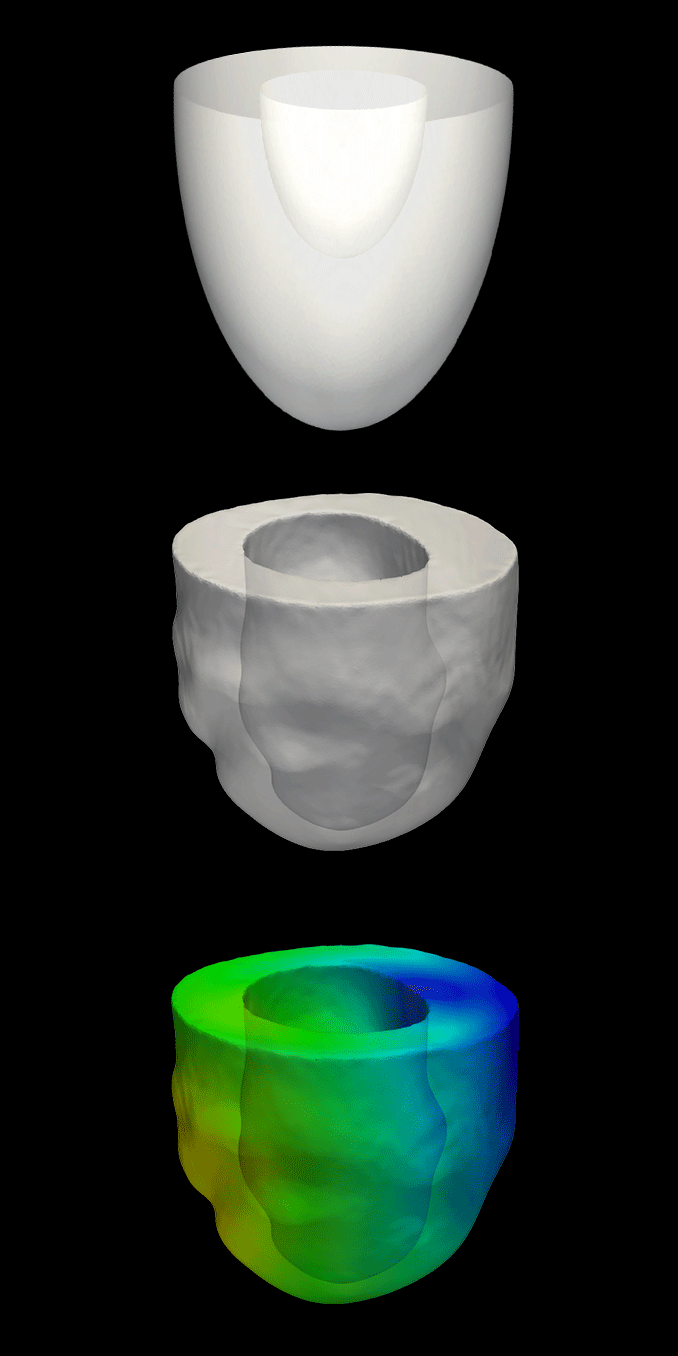
In biomedicine, the NSF Foundations for Digital Twins as Catalyzers of Biomedical Technological Innovation, in partnership with the U.S. federal agencies of the National Institutes of Health and the Food and Drug Administration, led to the development of Diffeomorphic Mapping Operator Learning (DIMON), an artificial intelligence framework that quickly solves the partial differential equations that underpin digital twin models. Tested on over 1,000 highly detailed digital hearts, DIMON accurately predicted how electrical signals move through each patient's heart, helping researchers study cardiac arrhythmia, identify patients at risk and recommend treatments.
NSF is also advancing digital twin research for manufacturing, improving additive manufacturing, multi-material processes, and collaboration across factories. The NSF Center for Digital Twins in Manufacturing is developing standardized frameworks to make digital twins easier to build, maintain and adapt across different factories and production systems. The center brings faculty, students and industry together, working side by side on technical advances, while addressing workforce and reskilling needs, helping both current and future workers gain the skills needed to implement digital twins across industry. And the Advanced Technological Education Micro Nano Technology Education Center created digital twins to introduce community college and high school students to state-of-the-art semiconductor labs —a cost-effective alternative for the students to learn about the process of semiconductor fabrication.
The NSF-funded AI Institute in Dynamic Systems has developed foundational digital‑twin technologies that integrate real‑time sensing, learning and uncertainty quantification for safety‑critical engineered systems, including nuclear energy infrastructure. Their work on nuclear digital twins emphasizes adaptive sensor placement, information‑theoretic guarantees for state estimation, and the assimilation of streaming data to continually update high‑fidelity models. In collaboration with Idaho National Laboratory, these capabilities have been deployed and translated into open‑source software for sensing and validation in nuclear energy applications.
Finally, digital twins are advancing cutting-edge technology. The NSF Engineering Research Center for Quantum Networks uses twins as virtual test beds to design quantum network architectures and device components. This allows researchers to explore and predict preferences before building physical systems.
NSF's ongoing support is helping digital twins unlock new possibilities — advancing scientific breakthroughs, fostering economic growth and ensuring the U.S. remains at the forefront of global innovation.
Additional Resources
- Digital Reefs
Harnessing digital twin technology to support coral reefs and the millions of people who depend on them. - Hybrid Autonomous Manufacturing, Moving from Evolution to Revolution
This center advances the development and deployment of hybrid autonomous manufacturing, using tools like digital twins to help transform American production and supply chains.