



Robotics: Engineering the future of intelligent machines
NSF's longstanding investments in robotics research expand possibilities, spark innovation, transform industries and deliver real-world impact
The bottom line
- A robot is a machine that can carry out complex tasks automatically, helping people with work that is repetitive, detailed or potentially hazardous.
- From factory floors and hospitals to disaster zones and space exploration, robotics improves productivity, precision and safety across industries, while driving discovery, innovation, new markets and global competitiveness.
- The U.S. National Science Foundation has invested billions of dollars over the past 50 years to drive the advances behind today's robotic systems.
What is a robot?
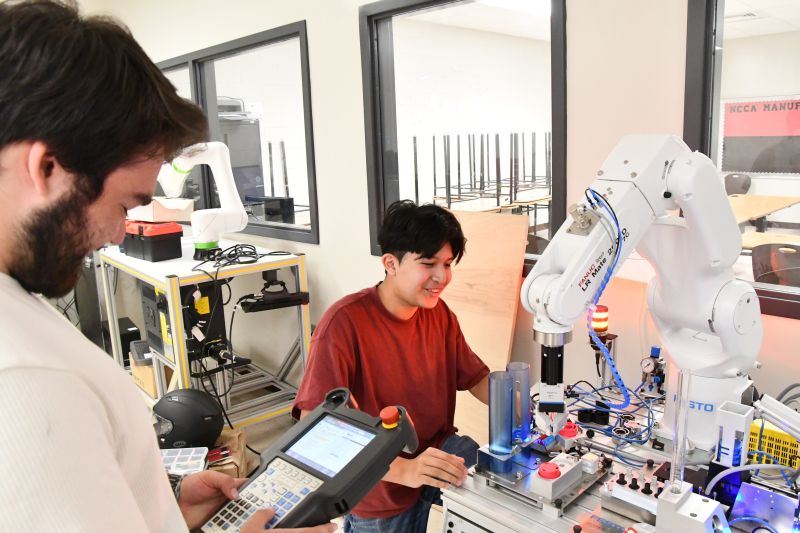
Modern robots are machines designed to carry out physical tasks, often with minimal human guidance, by sensing their surroundings, processing information and taking actions.
By combining sensors, computing and mechanical components, robots can assist people with a wide range of tasks, from assisting doctors with surgical procedures to helping farmers tend crops to unsupervised operation in environments too dangerous for humans, such as space, the deep sea or disaster zones.
Robotics technology refers to the broader engineering, software and artificial intelligence systems that make these machines possible, providing the principles and tools behind how robots perceive, plan and act.
Why is robotics important?
From simple, single-task machines to more advanced AI-enabled systems that can sense and respond to their surroundings, robots are turning digital intelligence into real-world action. Used across industries for decades, their impact continues to expand:
- Manufacturing: Industrial systems handle repetitive, heavy tasks like assembly, welding and moving materials, helping factories operate more safely and efficiently. Collaborative robots ("cobots") are designed to work safely with, and learn from, their human coworkers.
- Healthcare: From surgical systems to rehabilitation devices, these technologies improve precision, support minimally invasive care and allow users to work more effectively.
- Agriculture: Automated systems monitor crops, support harvesting and take on repetitive chores like milking dairy cows.
- Exploration: From deep-sea submersibles to Mars rovers, robotic systems venture into remote and extreme environments, advancing scientific discovery beyond the limits of human reach.
- Disaster response and recovery: Robots assist in search and rescue operations by navigating hazardous environments to help locate victims and support first responders.
- Service and household tasks: Automated technologies are increasingly helping with everyday chores like cleaning and yard work, as well as service roles such as taking restaurant orders, delivering food, and hospitality tasks — supporting people at home and work.
NSF's investments in robotics
For more than half a century, NSF has supported the scientific advances that underpin modern robotics. Even before the first NSF grant explicitly mentioning "robot" in 1972, the agency was supporting fundamental work in sensing, computer vision and machine movement — research that helped establish how machines could detect their surroundings, process information and convert digital instructions into physical movement.
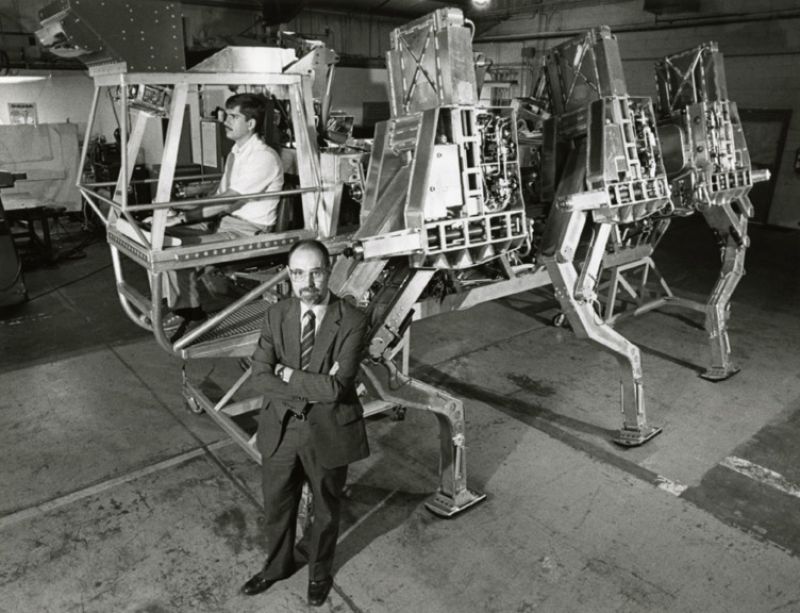
In the 1970s and 1980s, NSF-funded research began developing robotics systems capable of performing increasingly complex tasks. Early projects included mechanical arms for assembly lines, computer-controlled welding systems and algorithms that enabled machines to plan safe, efficient movements. Robots were also venturing beyond industrial settings, from legged machines designed to traverse rugged terrain to autonomous vehicles exploring the deep ocean.
By the 1990s, advances in probabilistic algorithms led to the development of simultaneous localization and mapping (SLAM), a breakthrough that allows robots to determine their position and build maps of unfamiliar spaces without GPS. SLAM has become essential to modern autonomous systems, allowing robots to perceive and navigate their surroundings with far greater reliability.
In parallel, decades of NSF funding helped advance AI research that allows robots to improve from experience and interaction rather than fixed programming. Work in reinforcement learning, imitation learning and interactive learning has enabled robots to improve performance over time and adapt to changing conditions, contributing to progress in areas such as object recognition, simulation-to-reality transfer and decision-making under uncertainty. NSF also supported breakthroughs in human-robot interaction, including humanoid platforms that model human movement and coordination, as well as social machines like RUBI (Robot Using Bayesian Inference), which applied probabilistic reasoning to support early childhood education.
What opportunities remain?
Robots today can perform impressive physical feats, from running and jumping to coordinated activities like soccer. But functioning reliably in the real world is still difficult. To do so, robots must interpret complex environments, anticipate changes, learn from experience and adjust their actions, capabilities that remain challenging for many systems. Researchers are working to close these gaps through advances in sensing technologies and improved control and learning algorithms.
At the same time, insights from human cognition are improving how people and robots interact, while new materials and mechanical design are making robotic systems more agile, resilient and adaptable.
Taking robotics into the future
The agency continues to drive robotics forward through investments that span foundational research, interdisciplinary collaborations and real-world applications. Programs such as the National Robotics Initiative and Emerging Frontiers in Research and Innovation have supported breakthroughs in perception, motion and adaptability, helping robots move beyond controlled settings and into complex, dynamic environments where they can better operate alongside people. These efforts have produced innovations ranging from origami-inspired robots built from thin, foldable materials to soft, flexible machines that can reconfigure to perform different tasks, such as a turtle-inspired robot that can switch between swimming and walking.
The NSF Foundational Research in Robotics program builds on this progress, supporting core advances that enable the next generation of intelligent systems. Current projects include a palm-sized, bat-inspired aerial robot designed to navigate through smoke and low-visibility conditions, as well as flexible, ultrasound-guided robotic devices that enable more precise and less invasive medical procedures. At the same time, NSF programs like Mind, Machine, and Motor Nexus bring together engineering, computing and behavioral sciences to improve how robots interact with people, from robotic hands that mirror natural movement to surgical systems that can respond to user technique and intent.
NSF also invests in the infrastructure and cross-sector partnerships that help translate research into real-world systems. For instance, NSF Engineering Research Centers and Industry–University Cooperative Research Centers are advancing robotic systems in areas such as manufacturing, agriculture and human augmentation, while emerging efforts in AI-enabled, programmable cloud laboratories are expanding access to tools for designing, testing and refining robotic systems. Through the NSF Small Business Innovation Research/Small Business Technology Transfer (SBIR/STTR) programs, the agency is advancing technologies that help sort thousands of products in seconds, target weeds while protecting crops, and enable new approaches to more customizable, automated manufacturing.
From early-stage research to deployment, NSF's sustained investments are advancing robotic capabilities and expanding their impact, shaping a future where they are more capable, adaptable and seamlessly integrated in ways that extend and support human work across industries and everyday life.
Additional resources
- NSF Robotics
Explore how NSF supports robotics research, development and deployment that expand capability and real-world impact. - "The Rise of AI-Powered Surgical Robots" | Podcast
An "NSF's Discovery Files" podcast exploring the development of advanced AI-powered surgical robots - TeachEngineering.org
Access a wide range of robotics-related educational tools and course materials for teachers, students and families. - Hybrid Autonomous Manufacturing, Moving from Evolution to Revolution
This center advances intelligent, autonomous manufacturing systems, helping transform American production and supply chains. - Human Augmentation via Dexterity Engineering Research Center
This center advances robotic dexterity to enhance human capabilities, developing versatile robotic hands that are easier to integrate into everyday work. - Internet of Things for Precision Agriculture
This center develops precision agriculture systems using autonomous ground and aerial technologies to improve food production. - Biofoundries at the University of Illinois Urbana-Champaign
This center integrates AI, robotic automation and synthetic biology to accelerate discovery and translate findings for real-world impact. - Robots and Sensors for the Human Well-being
A multi-university center applying robotics and sensor technologies to enhance healthcare, manufacturing, national security and emergency response.