



Engineering materials for the quantum age
Quantum materials are expanding the understanding of matter and opening new possibilities for future technologies
The bottom line
- Quantum materials harness unusual quantum effects to produce properties not found in ordinary materials, which could enable next-generation technologies like quantum computers, advanced sensing and ultra secure communications.
- From atomically thin layers and superconductors to light-emitting devices for secure communication and networking, decades of U.S. National Science Foundation support have helped uncover how quantum materials behave.
- NSF investments are helping build the scientific foundation for future quantum technologies.
What are quantum materials?
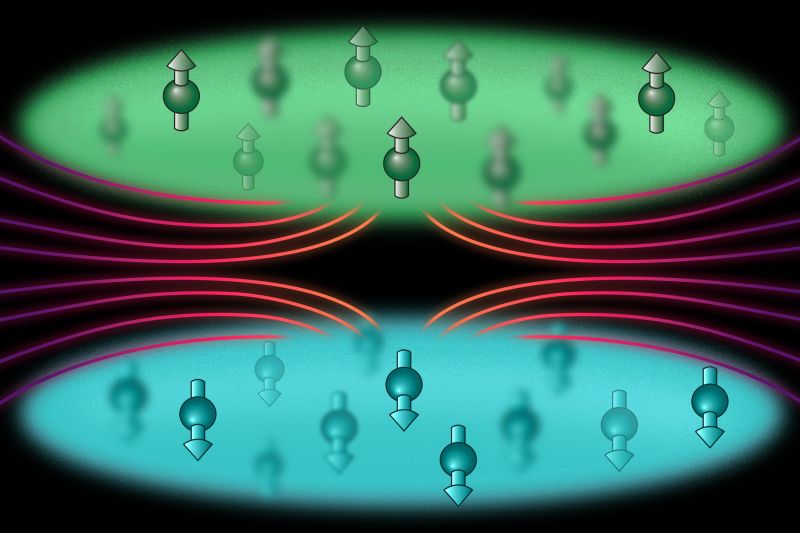
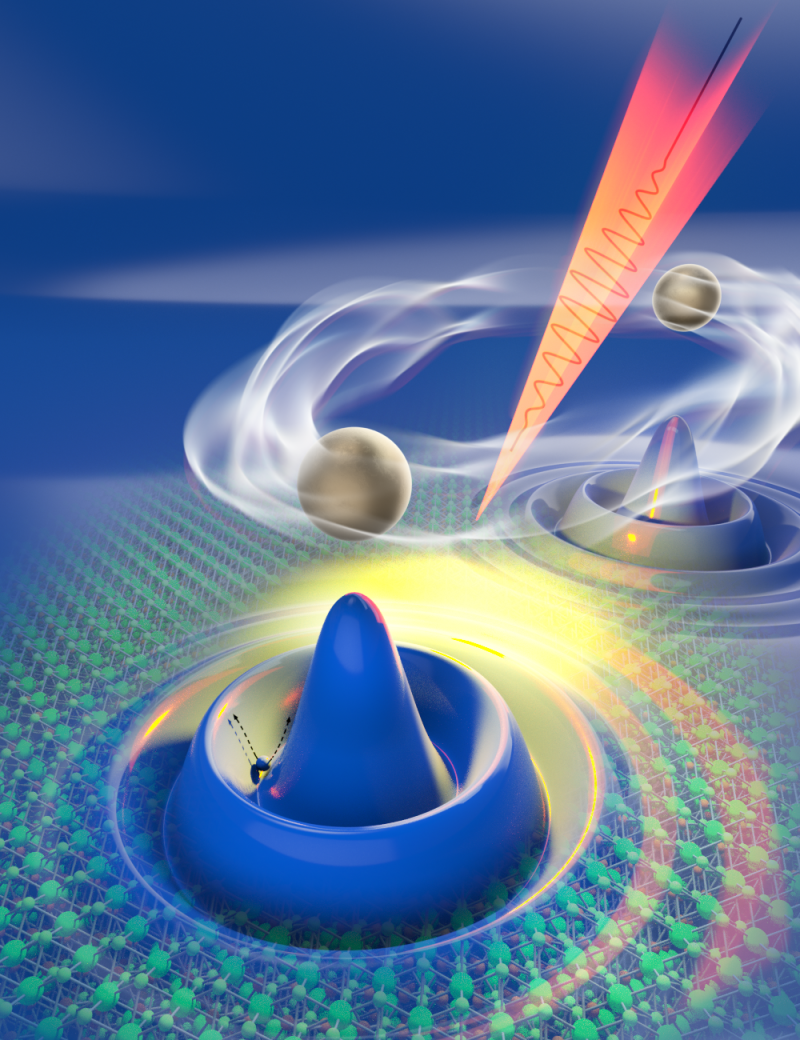
Most materials behave according to the familiar rules of everyday physics. But in the quantum world, at the scales of molecules, atoms and electrons, the laws of physics become peculiar. Quantum materials allow unusual quantum effects to manifest on a larger, collective scale, producing properties not found in ordinary materials. For example, quantum particles like electrons can behave collectively, producing properties such as superconductivity, magnetism and unusual interactions with light.
Why are quantum materials important?
Quantum materials already underpin technologies that people use every day. Their unusual properties enable advances in data storage, fiber-optic communications and highly sensitive magnetic field detectors used in technologies such as MRI scanners.
Researchers are now working to harness these same quantum properties to create technologies that go beyond current capabilities. For example, future quantum materials could help doctors detect diseases earlier, make computers far more powerful while using less energy, improve the reliability of communications and navigation systems and create more efficient ways to generate, store and transmit electricity and information.
By expanding what is possible in computing, communications, sensing and energy technologies, advances in quantum materials could help drive innovation, support high-tech industries and strengthen U.S. economic competitiveness and technological leadership.
NSF's investments in quantum materials
1960s-1970s — Discovering unusual quantum behavior in matter
- Cooling matter into new states: NSF-supported researchers discovered that cooling certain materials to extremely low temperatures causes atoms and electrons to behave collectively, revealing new states of matter, such as exotic phases of superconductors (which conduct electricity with zero resistance) and superfluids (which flow without friction).
- The science behind modern electronics: NSF-supported research revealed how the arrangements of atoms, including crystal structure and atomic defects, shape electron behavior and determine a material's properties. These discoveries helped lay the scientific foundation for modern electronic, photonic and quantum technologies.
- When electrons work together: NSF-supported research advanced many-body physics, statistical mechanics and the quantum theory of solids, revealing how interacting electrons can create new phases of matter, including topological materials that conduct electricity on their surfaces.
1980s-2000s — Learning to engineer and control quantum behavior in materials
- Moving electricity without energy loss: Following the discovery of high-temperature superconductors, which carry electricity without energy loss while requiring less extreme cooling, NSF supported research to understand their unusual quantum behavior and explore their potential for practical technologies.
- Controlling quantum behavior at the nanoscale: NSF also supported research on nanoscale semiconductor structures, including quantum wells, quantum dots and quantum wires, uncovering new quantum behaviors that enabled technologies such as QLED television displays. This work on quantum dots helped earn the 2023 Nobel Prize in chemistry.
- A new way for electricity to flow: NSF-supported research helped establish the theoretical and experimental foundations of topological insulators and semimetals, whose unusual electronic properties allow electricity to flow along their surfaces with exceptional stability, even in the presence of defects.
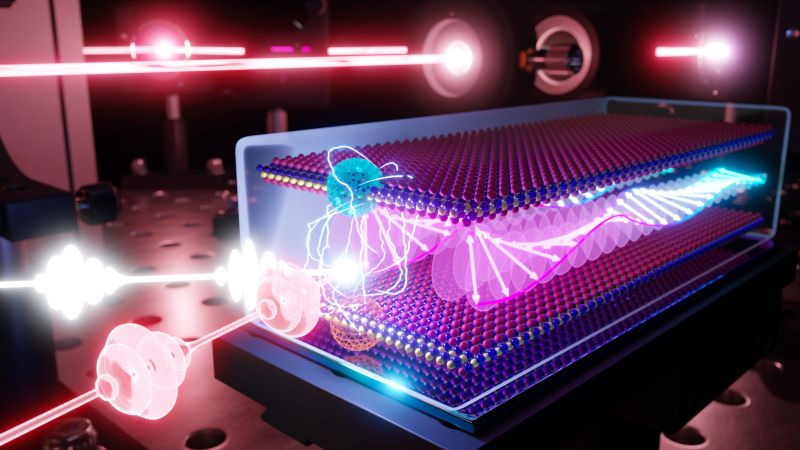
- 2D and atomically thin materials: Following the isolation of graphene in 2004, NSF supported research on atomically thin materials, where electrons behave in new ways that produce unique electrical, optical and magnetic properties.
What opportunities remain?
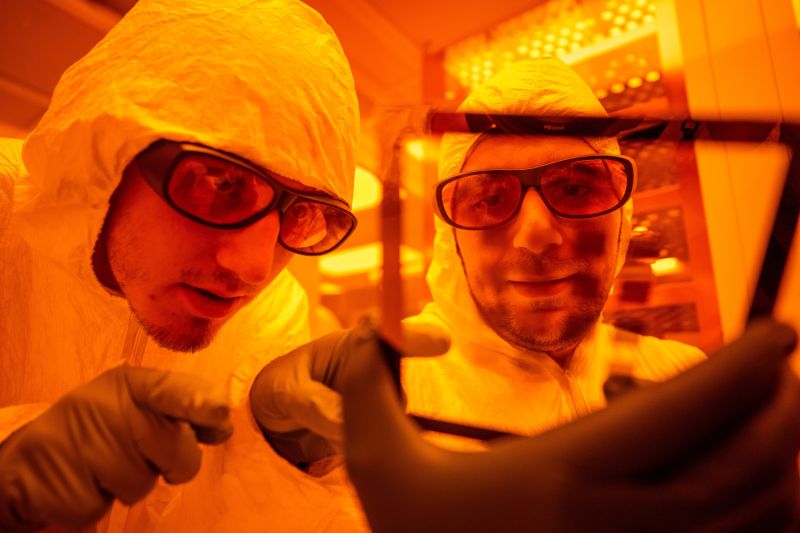
Despite decades of progress, many questions about quantum materials remain unanswered. Researchers are working to better understand how interactions among electrons and atoms give rise to the unusual properties of quantum materials, how to manufacture these materials at scale, and how to ensure they perform reliably outside the lab.
Realizing the full potential of these materials will also require a skilled workforce capable of discovering, designing and manufacturing next-generation quantum technologies. Together, these advances will accelerate innovation across fields such as health care, energy and transportation.
Taking quantum materials research into the future
Since the passage of the "National Quantum Initiative Act" in 2018, NSF has expanded its investments in quantum materials research. Through programs such as the NSF Quantum Leap Challenge Institutes, NSF Materials Research Science and Engineering Centers, NSF Designing Materials to Revolutionize and Engineer our Future and NSF National Quantum Virtual Laboratory - Quantum Testbeds, researchers are advancing the design, discovery and application of quantum materials. These efforts include:
- Creating new quantum materials with tailored electronic, magnetic and optical properties for future technologies.
- Investigating superconductors, magnetic quantum materials and quantum spin liquids to better understand their unusual quantum properties.
- Developing quantum devices, sensors and secure communication technologies for future computing, sensing and networking.
- Using theory, artificial intelligence and experiments to design quantum materials before they are created in the laboratory, including high-entropy and moiré materials with novel quantum properties.
- Building the quantum workforce through education and training programs such as NSF Quantum for All, where NSF is helping high school science teachers bring quantum concepts into their classrooms and preparing the next generation of quantum scientists and engineers.
NSF Project Triad brings together industry, academia and government to demonstrate how integrated quantum systems could enable real-world applications in areas such as public safety, healthcare, energy and manufacturing.
Additional resources
- Quantum Information Science
Learn how NSF investments in quantum materials, computing, sensing and networking are helping advance the next generation of quantum technologies. - "Photonic Quantum Chips Promise Fast Future" | Podcast
An "NSF's Discovery Files" podcast highlighting a breakthrough that integrates photonic quantum systems onto traditional semiconductor chips. - "AI-Powered Labs Accelerating Scientific Discovery" | Podcast
Learn how NSF-supported researchers are using AI and automated laboratories to accelerate the discovery of new materials and technologies. - "Bringing Quantum Concepts into Classrooms" | Podcast
An "NSF's Discovery Files" podcast exploring how educators are introducing quantum concepts to students and helping build the future quantum workforce through innovative teaching approaches and hands-on learning opportunities.