



Space weather: Protecting the planet
NSF supports research to understand and predict space weather events and their impact on critical infrastructure
The bottom line
- Space weather refers to changes in the space environment that can interfere with satellite communications, air travel and power grids on Earth.
- Like weather on Earth, space weather cannot be halted, but events can be predicted and prepared for.
- U.S. National Science Foundation-supported ground-based observations and research are critical to understanding the complex feedback loop between the sun and Earth's system.
What is space weather?
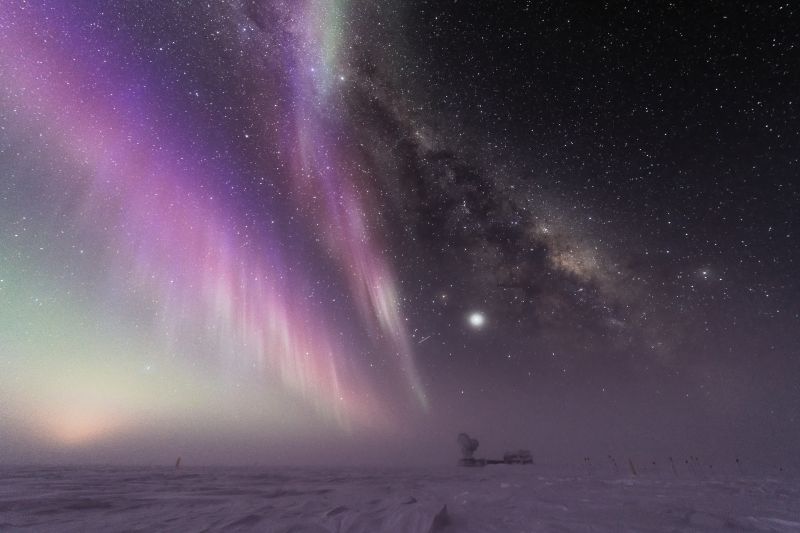
Space weather is driven primarily by the behavior of the sun's magnetic field, which creates activity on the surface of the sun. These solar phenomena — such as sunspots (dark, cool areas on the surface), solar flares (bursts of electromagnetic radiation), solar wind (a stream of charged particles) and coronal mass ejections (clouds of plasma and magnetic winds) — affect the space environment around the sun, and, in turn, can interact with the Earth's magnetic field and trigger geomagnetic storms.
There is also a complex feedback loop between the sun and the Earth's system. Some space weather activity can be driven by events on Earth, such as volcanic eruptions, major earthquakes and extreme weather that can send bursts of energy up through the atmosphere into the near-Earth space environment.
Why is space weather research important?
Just like terrestrial weather, space weather is always occurring. There are quiet days, there are stormy days, and everything in between.
During more active periods, space weather can damage technological infrastructure and disrupt services that are crucial to the economy, public safety and national security. As the nation's dependence on technology increases, so does its vulnerability to space weather hazards.
What opportunities remain?
Research has advanced significantly since the 1950s, yet there is still much to learn. Studies can provide decision-makers with more time to protect infrastructure from major events and to take corrective action for smaller impacts that build up over time. Key research areas include:
- Improving understanding of how the sun's electromagnetic field works.
- Studying the baseline level of solar activity, such as solar wind, when there are no major surface events occurring.
- Understanding what forces trigger eruptions of coronal mass ejections and solar flares to improve forecasting.
- Examining what drives moderate or severe space weather events, including terrestrial factors like volcanic eruptions, severe weather systems and earthquakes.
NSF's investments in space weather research
Laying the groundwork
Since 1950, NSF has supported research on the drivers of solar disturbances and how space weather reaches Earth. An early milestone came during the International Geophysical Year (1957-1958), when NSF-funded researchers observed the sun continuously for a year, during the peak of its 11-year solar cycle, when sunspot activity is highest. Satellite instruments detected massive rings of charged particles trapped by the Earth's magnetic field more than 400 miles above the surface. Named the Van Allen radiation belts, these rings help shield Earth from space weather.
In 1962, NSF dedicated the McMath-Pierce Solar Telescope at NSF Kitt Peak National Observatory — then the world's largest solar telescope — providing unprecedented views of sunspots. The telescope was decommissioned in 2017 and now is the home of the Windows on the Universe Center for Astronomy Outreach educational center, operated by NSF NOIRLab.
Ground-based telescopes that make up the NSF-National Oceanic and Atmospheric Administration Global Oscillation Network Group (GONG), established in the 1990s, provide continuous, worldwide observations of the sun, advancing understanding of solar activity and predicting space weather events.
Ground-based radars also play a role. The Super Dual Auroral Radar Network (SuperDARN) is an international network of more than 30 low-power high-frequency radars established in 1993. The SuperDARN radars observe the ionosphere, a layer of the Earth's upper atmosphere that interacts with solar radiation, to provide information about Earth's space environment.
In 1995, NSF and other federal agencies established the National Space Weather Program to coordinate their space weather forecasting work, strengthening the nation's ability to observe and mitigate the effects of space weather. Space weather continues to be a priority today and a necessary component for ensuring American space superiority.
Taking space weather research into the future
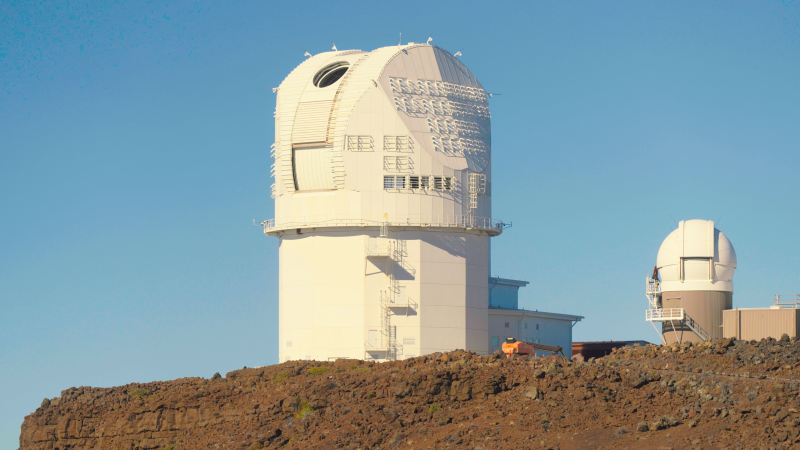
NSF continues to support research and facilities that help researchers understand the sun, the Earth and improve forecasts of major space weather events. Researchers combine ground- and space-based observations with models of the Sun-Earth system. This enables them to track space weather and study its effects on satellites, power grids and other technologies. For example:
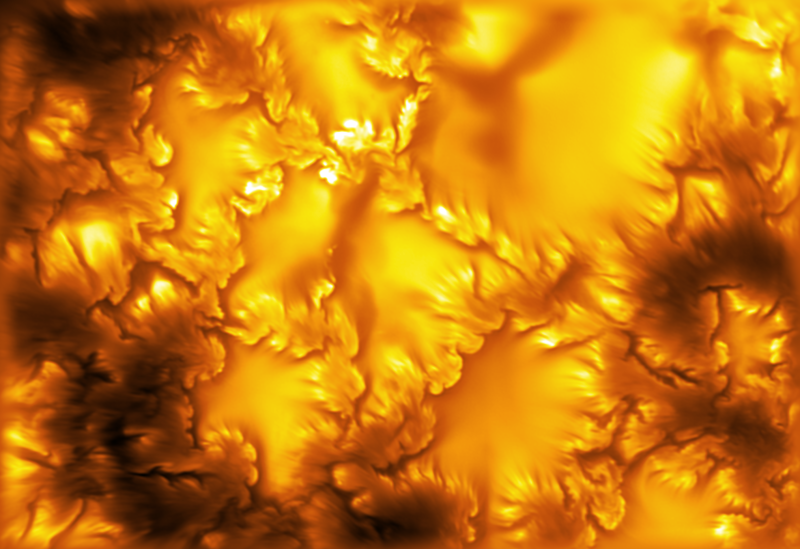
- The NSF Daniel K. Inouye Solar Telescope in Hawaii, the largest and most powerful solar telescope on Earth, can map the magnetic fields within the sun's corona, where solar eruptions occur. In 2026, the sharpest image ever taken by the telescope confirmed the existence of small whirlpools on the surface. Researchers believe this activity could produce the magnetic energy that creates solar flares and coronal mass ejections and also explains why the sun’s outer atmosphere is hotter than the surface.
- NSF established the Advancing National Space Weather Expertise and Research toward Societal resilience (ANSWERS) program in 2021 to bring together teams of solar and geospace researchers. Through the ANSWERS program, monitors were deployed in Hawaii to provide early warning alerts for extreme solar radiation storms that threaten satellites, GPS and power grids.
- The SuperMAGnetometer (SuperMAG) initiative is an international collaboration that analyzes data from over 600 ground-based instruments monitoring Earth's magnetic field and electric activity in the upper atmosphere caused by solar wind. SuperMAG provides access to these measurements, which can reveal disturbances that affect radio communications and GPS.
- The Midlatitude Allsky-imaging Network for GeoSpace Observations monitors wind speeds and temperatures in the upper atmosphere, as well as airglow — the natural light that appears around Earth — and gravity waves, which are meteorological phenomena similar to low-frequency sound waves that travel from the lower to the upper atmosphere. The data collected enables researchers to better understand the lower atmosphere's role in driving space weather.
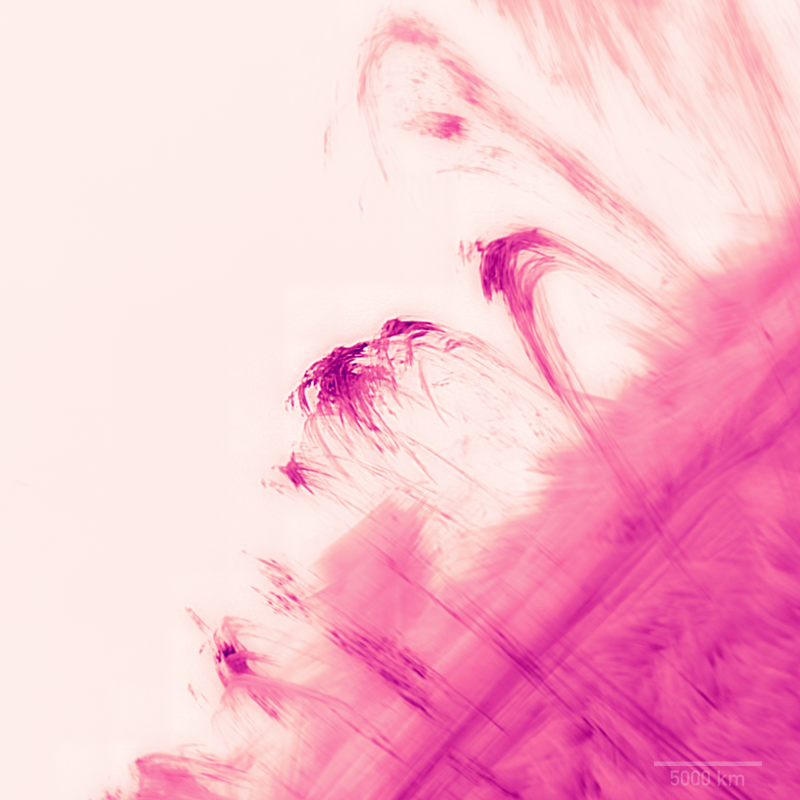
- Funded by NSF, new coronal adaptive optics technology installed at the Goode Solar Telescope at Big Bear Solar Observatory has produced the clearest images and videos of fine structures in the sun's corona. The Cona system compensates for the blur caused by atmospheric turbulence, improving image resolution. Studying the structure and dynamics of the cooler plasma in the corona could enhance the understanding of eruptions that send plasma into space.
- Through the NSF Mid-Scale Research Infrastructure program, NSF is funding the design of the Next-Generation Ground-based Solar Observing Network, an upgraded network of six telescopes that will replace GONG. Advanced instruments will enable precise measurements of the magnetic field vector at multiple heights in the solar atmosphere.
Additional Resources
- What is Space Weather?
Can a solar storm impact Earth? What are solar flares and coronal mass ejections? Hear explanations about the various aspects of the sun and solar weather. - Solar Weather Astronomy
Astronomers can study the sun as never before. Learn why it's important to study the sun, why magnetic fields result in solar flares, and how new tools are changing our understanding of the sun. - Ka Lā | The Sun, the Earth and Us
Explore humanity’s connection to the Sun — from Hawaiian legends of Māui lassoing the Sun to cutting-edge discoveries made with the NSF Daniel K. Inouye Solar Telescope.