




Space weather impacts linked to aurora brightness
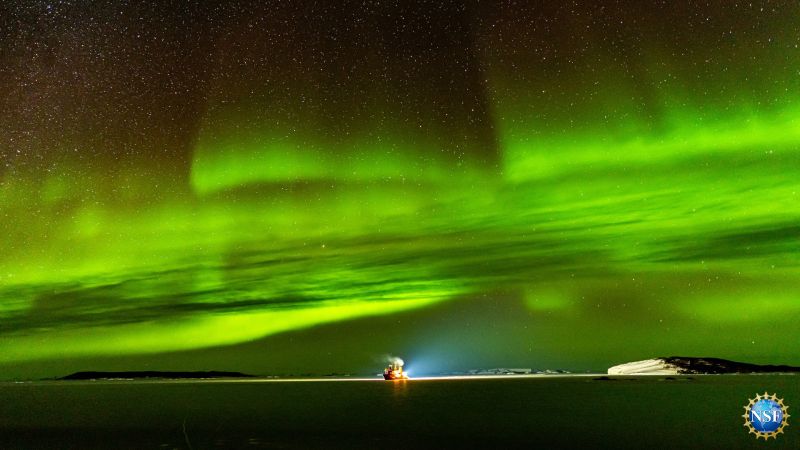
A geomagnetic superstorm in November 2025 that brightened the skies with auroras also caused major GPS errors in usually calm mid-latitude regions, disrupting farming and autonomous transportation.
A new study led by U.S. National Science Foundation-supported researchers found a connection between aurora brightness and the magnitude of impacts on technological systems, including GPS. When the aurora was at its brightest, GPS errors exceeded 10 meters (33 feet) at certain latitudes.
The space weather event created highly uneven concentrations of plasma in the ionosphere, a layer of the Earth's upper atmosphere that interacts with solar radiation. These irregularities caused rapid changes in how radio waves propagate through the ionosphere, resulting in significant GPS positioning errors.
Such GPS positioning errors can have economic implications. Had the November geomagnetic disturbance occurred during peak farming season in the continental U.S., it could have caused significant losses for the agriculture industry, which relies on precise GPS positioning.
This study and similar NSF-supported research on space weather events build foundational knowledge of the physical processes that control auroral features, such as energy flux, expansion velocity, and precipitation scale sizes present in the auroral arc, all of which contribute to plasma density irregularities that can cause scintillation.