




Advancing farming with cutting-edge technologies
Precision agriculture is revolutionizing the way farmers grow crops, lowering costs, maximizing yields, optimizing the use of irrigation water, addressing farming labor challenges and securing the supply of safe, high-quality food.
The bottom line
- Precision agriculture leverages technology and data analytics to provide timely, detailed information on crops, soil and environmental conditions.
- It helps farmers use resources more accurately and efficiently, improves soil quality and crop health and addresses labor shortages.
- The U.S. National Science Foundation's investments drive technological innovation and help farmers adopt state-of-the-art precision agriculture systems, enhancing U.S. farm operations, optimizing land use and bolstering food security.
What is precision agriculture?
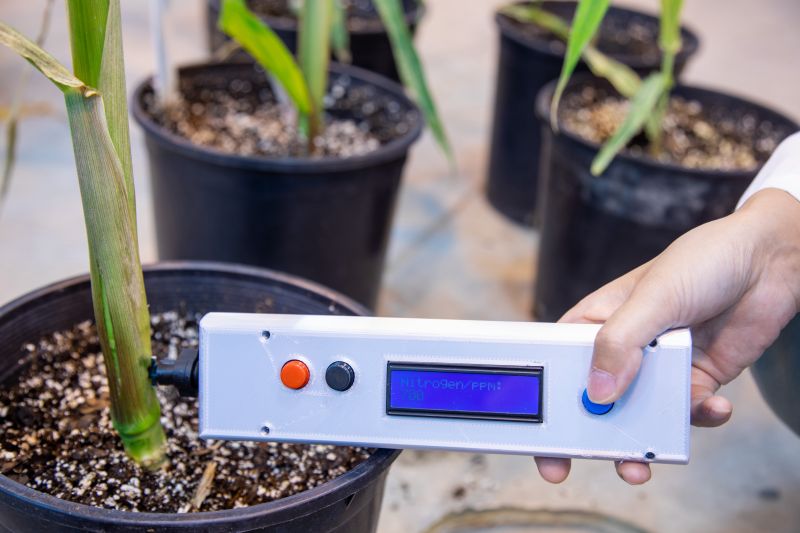
Precision agriculture is a crop management strategy that gathers and analyzes data to ensure that crops receive exactly what they need for optimum health and productivity. It uses sensors, satellites and other technologies to collect data on crop status, weather, soil conditions, water needs, disease and pests. Algorithms convert these data into actionable information, allowing farmers to tailor their decisions to their unique field conditions.
The earliest precision agriculture systems, employed in the 1990s, included portable yield monitors and GPS-guided tractors that could perform targeted seed placement or fertilizer application. Today, advanced technologies use remote and in situ sensing, wireless networks, robotics and AI-based analytics to provide more detailed and timely data. These modern systems can provide live feedback, enabling real-time adjustments to optimize farming operations.
Why is precision agriculture important?
Historically, farmers managed pests, disease, irrigation and soil nutrients using observation and trial and error — necessary but inefficient practices that are expensive and labor-intensive. With rising production costs and labor shortages, updating or replacing these practices with more effective methods is a priority.
Precision agriculture makes farming easier and less stressful. By providing site-specific, real-time data, this set of technologies enables farmers to make accurate, timely management decisions, producing higher yields with fewer inputs.
Examples of precision agriculture's benefits include:
- Optimizing the timing of planting to maximize yields.
- Early intervention for problems like crop disease, pest outbreaks and soil nutrient deficits.
- Applying fertilizers, pesticides and irrigation only where they are needed. This allows farmers to address problem areas while allocating resources efficiently, improving yields, reducing waste and saving money.
- Using AI and robotics to support tasks that are difficult, time-sensitive or labor-intensive, such as crop monitoring, harvesting, sorting, irrigation planning and disease detection.
NSF's investments in precision agriculture
Early NSF investments enabled key analytical tools used in today's precision agriculture systems. For example, NSF support in the 1980s-90s for the National Center for Geographic Information and Analysis was instrumental in the development and growth of geographic information systems (GIS) — tools that visualize and analyze spatial data. Use of GIS in precision agriculture enables farmers to integrate variables like soil type, wind direction, rainfall amount or topography to evaluate site suitability and optimize farming operations.
Decades of NSF-supported research in foundational robotics, computer vision, machine learning, sensing and cyber-physical systems have helped create tools such as drones, advanced cameras and software that can identify pests and diseases, monitor crops at scale, support autonomous field operations and improve decision-making under uncertainty.
Recently, NSF-supported researchers linked a major geomagnetic storm in May 2024 to malfunctioning GPS-enabled tractors in the Midwest, which cost farmers hundreds of millions of dollars. Building on this finding, researchers are developing ways to better forecast space weather disturbances and correct GPS errors to mitigate future space weather risks to farmers.
What opportunities remain?
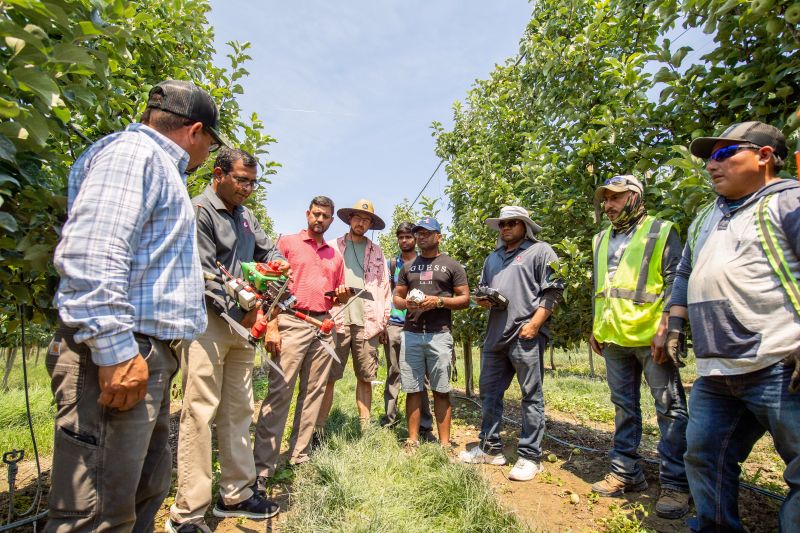
Despite the benefits of precision agriculture, there are barriers to its widespread adoption. Precision agriculture technologies save money in the long term, but high upfront costs inhibit many farmers from implementing them. Additionally, rural areas often lack the wireless infrastructure required for advanced precision agriculture technologies. And many farmers prefer equipment that they can build, adapt and repair themselves.
In addition, farmers need tools that are reliable, explainable and designed for real farm conditions — not just laboratory demonstrations. That is why NSF investments increasingly emphasize partnerships with growers, testing on real farms, workforce development and translation pathways that help move promising research into practical use.
Taking precision agriculture into the future
Today, NSF's investments help equip agricultural communities with the tools, technical assistance and infrastructure needed to benefit from precision agriculture. These include:
- Working with farmers and community members to deploy networks of low-cost sensors that provide critical, real-time weather and soil data for farm management through the Data-Advanced Research and Education project, supported by the NSF Established Program to Stimulate Competitive Research.
- Gathering input from farmers to guide the development of low-cost sensors and wireless communication systems and transition these technologies to real-world use through the NSF Engineering Research Center for the Internet of Things for Precision Agriculture.
- Working to deploy universal, affordable rural broadband through the NSF Agriculture and Rural Communities platform, which will enable advanced precision agriculture.
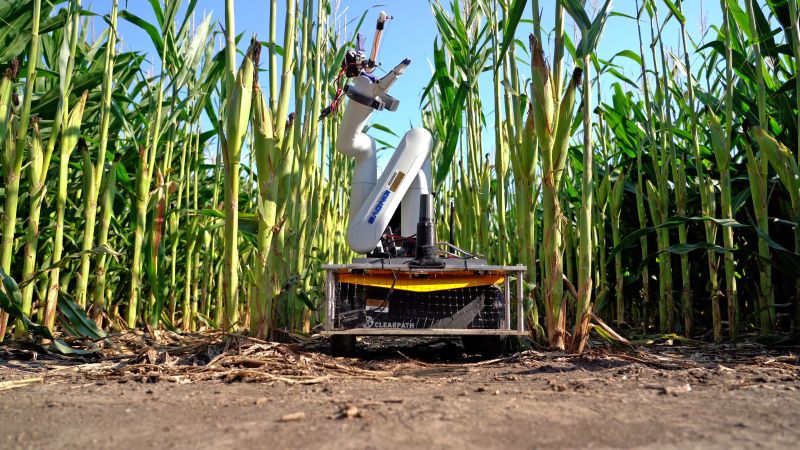
NSF is also helping farmers deploy cutting-edge AI-driven tools. These efforts include:
- Collaborating with farmers to develop and test AI-driven technologies under real-world farming conditions through the NSF AgTech Engine in North Dakota and the NSF Artificial Intelligence for Agriculture (AI4Ag) Testbed.
- Investing in AI innovation and training for farmers by partnering with international agencies through the Advancing Innovations for Empowering NextGen AGriculturE initiative, and with the U.S. Department of Agriculture (USDA) National Institute of Food and Agriculture through the NSF TechAccess: AI-Ready America initiative.
- Supporting agriculture-focused National Artificial Intelligence Research Institutes with USDA that are developing predictive digital twins of plants and fields and AI-driven systems that help farmers manage risk, improve productivity and strengthen the nation’s food systems.
With these investments, NSF empowers farmers with state-of-the-art tools and knowledge to optimize crop health and productivity, strengthen food security and improve their quality of life.
Additional resources
- Boosting Crops with Biotechnology
Learn how NSF's investments in agricultural biotechnologies are transforming food and fiber production. - "Convergence Research – Highlighting AgTech PhD Pathways"
This video is your guide to understanding what a PhD in Agriculture or Engineering entails, why it might be the right path for you, and how to successfully apply to programs in the United States. - "Robotics: Engineering the future of intelligent machines"
NSF's investments in robotics expand possibilities in agriculture and more. - "AI enhancing Agriculture"
Explore how Artificial Intelligence technologies help support the nation’s agricultural production needs.