





The U.S. National Science Foundation Directorate for Engineering (NSF ENG) invests in fundamental research and education to drive advances in manufacturing and materials, robotics and intelligent systems, and the built environment.
These investments lead to resilient civil infrastructure, spur emerging and critical technologies, and fuel the nation's economy, while advancing artificial intelligence and quantum technologies. They help prepare students across the U.S. to lead at the forefront of civil engineering, industrial engineering, materials engineering, mechanical engineering, operations engineering, structural engineering and other fields.
 On this page
What we support
NSF ENG investments in civil, mechanical and manufacturing research expand what's possible through engineering and address national needs.
Advances in fundamental engineering are essential for the future manufacturing of semiconductor and quantum technologies; structures that survive earthquakes, storm surge and tornadoes; and intelligent systems that assist people and improve lives.
Core programs
ENG invests in fundamental engineering research and education through core programs. These core programs support individual researchers, small teams and interdisciplinary research spanning multiple programs.
The following ENG core programs advance civil, mechanical and manufacturing innovation.
Advanced Manufacturing, Design, and Operations
Supports research on advanced manufacturing, materials and service processes; their integration into facilities, supply chains, and other systems; and the optimal operation and design of these systems.
Engineering for the Built Environment
Supports research on civil infrastructure and civil infrastructure systems, from materials to global networks, for prosperous, resilient and safe communities.
Foundational Research in Robotics
Supports research to develop robotic systems that exhibit significant levels of both computational capability and physical complexity.
Intelligent and Interactive Dynamic Systems
Supports research to advance the science and engineering of intelligent dynamic systems, including engineered systems that interact with people.
Mechanics of Advanced Materials Systems
Supports research on deformation and failure in engineered and biological materials or materials systems.
Centers and research infrastructure
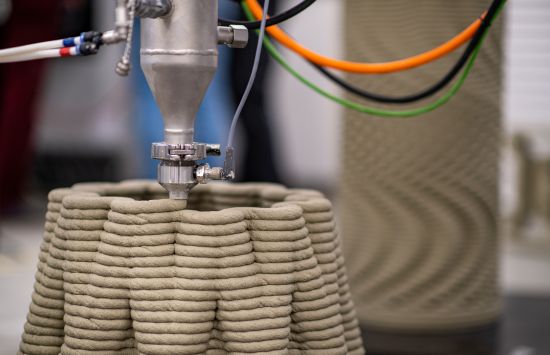
ENG supports multidisciplinary research centers that bring together cutting-edge engineering, industry expertise and workforce development to address complex national challenges. These long-term partnerships allow new ideas to be developed, integrated and tested to make real, beneficial impacts on society.

The NSF AI Institute for Advances in Optimization is revolutionizing decision-making by fusing AI and mathematical optimization into intelligent systems for agriculture, energy, healthcare, manufacturing and supply chains, and other uses.
The NSF Science and Technology Center for Engineering MechanoBiology is advancing the understanding, technologies and practices to control, recover, reuse and manage phosphorus, an element essential to food production.
Education and workforce development
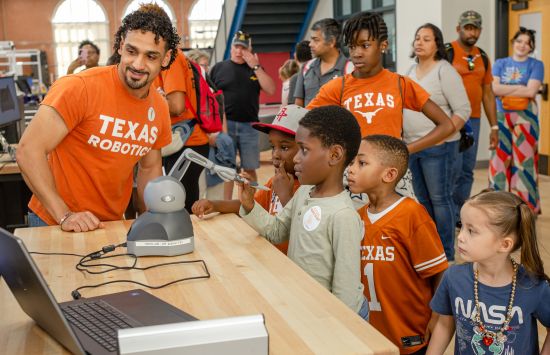
ENG provides opportunities to improve engineering education and expand engineering workforce development to prepare engineers for rewarding careers in industries ranging from manufacturing and supply chains to construction and robotics.
Stay connected
Subscribe to email updates from ENG
Get news on funding opportunities, upcoming events and research highlights.
Become a reviewer
Gain insights into the NSF merit review criteria and what makes a good proposal.
Find funding and contact a program director
Search for programs and funding opportunities and find contact information for program directors. See also "5 tips on how to work with an NSF program officer."
Engineering news
See the latest award announcements and research highlights.