





The U.S. National Science Foundation Directorate for Engineering (NSF ENG) supports a wide array of research facilities and infrastructure throughout the U.S.
ENG-supported research infrastructure enables groundbreaking discoveries, technologies, and solutions that address societal challenges. These shared-use experimental facilities, foundries and tools are accessible to researchers and students across the nation, serving as training grounds for the next generation of scientists and engineers.
This page highlights research infrastructure of interest to the engineering community for use in their research and education activities, as well as related funding opportunities and resources.
 On this page
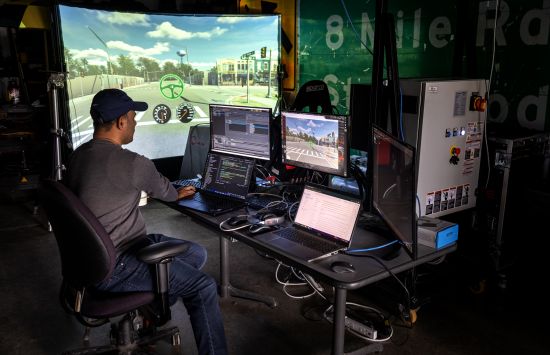
Mcity 2.0
This augmented reality test bed advances connected and automated vehicle technologies by providing researchers with remote access to the resources and infrastructure of the Mcity test facility.
The remote capabilities of Mcity 2.0 are now operational, and they can be used with the Mcity physical test facility and research vehicles.
NSF Mid-Scale Research Infrastructure
This NSF-wide program supports the design and implementation of mid-scale research infrastructure that addresses engineering research needs, including experimental facilities, networks, equipment, cyberinfrastructure, datasets and personnel, and whose total costs range between $4 million and $100 million.
This program, managed by the NSF Office of Research Infrastructure, is divided into two tracks:
- NSF Mid-scale Research Infrastructure Track-1: Funds design and implementation projects under $20 million.
- NSF Mid-scale Research Infrastructure Track-2: Funds implementation projects that cost between $20 million and $100 million.
Several mid-scale research infrastructure projects are being designed and/or built to enable researchers across the U.S. to investigate new engineering challenges.
- Distributed Energy Resource Connect (DERconnect).
- National Full-Scale Testing Infrastructure for Community Hardening in Extreme Wind, Surge, and Wave Events (NICHE).
- National Multi-User Silicon Carbide Research Fabrication Facility (MUSiC).
- National Testing Facility for Enhancing Wind Resiliency of Infrastructure in Tornado-Downburst-Gust Front Events (NEWRITE).
- National Quantum Nanofab (NQN).
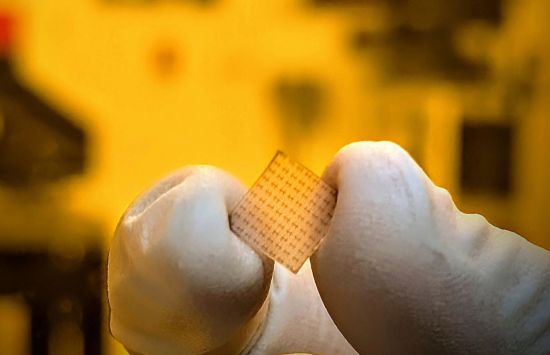
NSF National Nanotechnology Coordinated Infrastructure (NSF NNCI)
This network of 16 university-based facilities advances nanoscale science, engineering and technology. The sites provide researchers from academia, industry and government access to more than 2,000 leading-edge tools, training and expertise.
The network coordinates its activities through the NNCI Coordinating Office located at Georgia Tech.
Explore NNCI facilities:
- Center for Nanoscale Systems, led by Harvard University.
- Cornell NanoScale Science and Technology Facility, led by Cornell University.
- Kentucky Multi-scale Manufacturing and Nanointegration Node, led by University of Louisville.
- Mid-Atlantic Nanotechnology Hub, led by University of Pennsylvania.
- Midwest Nano Infrastructure Corridor, led by University of Minnesota.
- Montana Nanotechnology Facility, led by Montana State University.
- nano@stanford, led by Stanford University.
- Nanotechnology Collaborative Infrastructure Southwest, led by Arizona State University.
- Nebraska Nanoscale Facility, led by University of Nebraska -- Lincoln.
- Northwest Nanotechnology Infrastructure, led by University of Washington.
- Research Triangle Nanotechnology Network, led by North Carolina State University.
- San Diego Nanotechnology Infrastructure, led by UC San Diego.
- Soft and Hybrid Nanotechnology Experimental Resource, led by Northwestern University.
- Southeastern Nanotechnology Infrastructure Corridor, led by Georgia Tech.
- Texas Nanofabrication Facility, led by The University of Texas at Austin.
- National Center for Earth and Environmental Nanotechnology Infrastructure, led by Virginia Tech.
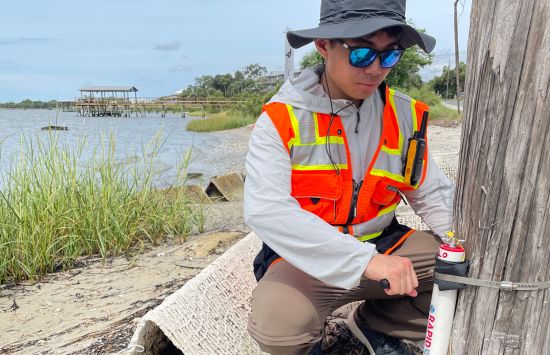
NSF Natural Hazards Engineering Research Infrastructure (NSF NHERI)
These university-based facilities allow researchers to investigate the effects of earthquakes, wind and coastal hazards, and to test innovative concepts to protect individuals, communities and critical infrastructure.
They provide access to experimental laboratories, field equipment, cyberinfrastructure, computational modeling and simulation tools, datasets and a network of engineering, social science and interdisciplinary researchers.
Explore NSF-supported NHERI facilities and cyberinfrastructure:
- Wind Research Facility at University of Florida.
- Wave Research Laboratory at Oregon State University.
- CONVERGE Natural Hazards Center at University of Colorado Boulder.
- DesignSafe community cyberinfrastructure at The University of Texas at Austin.
- Geotechnical Centrifuges at UC Davis.
- Large High Performance Outdoor Shake Table Facility at UC San Diego.
- Cyber-Physical Simulation at Lehigh University.
- Large Mobile Shakers at The University of Texas at Austin.
- Natural Hazard and Disaster Reconnaissance (RAPID) Facility at University of Washington.
- Network Coordination Office at Purdue University.
- Computational Modeling and Simulation Center (SimCenter) at UC Berkley.
- Wall of Wind Experimental Facility at Florida International University.