




The U.S. National Science Foundation Directorate for Engineering (NSF ENG) invests in fundamental engineering research and education to drive advances in future computing, wireless, microelectronics, semiconductors and quantum technologies.
These investments lead to new capabilities in computing and communications, spur emerging and critical technologies, and strengthen the nation's competitiveness, while advancing artificial intelligence and quantum systems. They help prepare students across the U.S. to lead at the forefront of computer engineering, electrical engineering, systems engineering and other fields.
 On this page
What we support
NSF ENG investments in electrical, communications and computing systems research expand what's possible through engineering and address national needs.
Advances in fundamental engineering are essential for quantum computing, sensing and networks; secure and reliable energy and power; and high-performance, low-energy devices for extreme conditions. Learn about some of our areas of interest:
Core programs
ENG invests in fundamental engineering research and education through core programs. ENG core programs support individual researchers, small teams and interdisciplinary research spanning multiple programs.
Several ENG core programs advance electrical, communications and computing systems.
Electronic, Photonic, Magnetic, and Quantum Devices
Supports research to create novel classical and quantum devices, exploring matter's electronic, photonic and magnetic properties to enable new applications.
Circuits and Systems for Communications and Sensing
Supports research on classical and quantum aspects of advanced components, systems and signal processing for communications and sensing.
Energy, Power, Control, and Learning
Supports research on systems and control, learning, optimization, artificial intelligence and networked multi-agent systems, and their applications, with emphasis on power and energy systems.
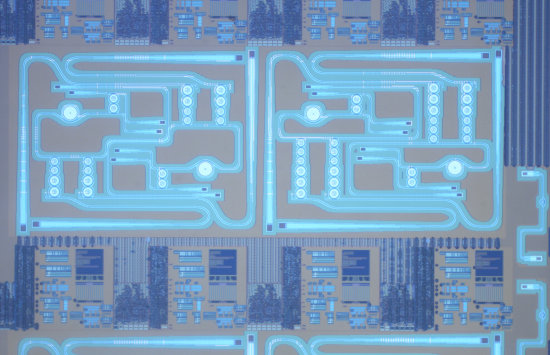
Centers and research infrastructure
ENG supports multidisciplinary research centers that bring together cutting-edge engineering, industry expertise and workforce development to address complex national challenges. These long-term partnerships allow new ideas to be developed, integrated and tested to make real, beneficial impacts on society.
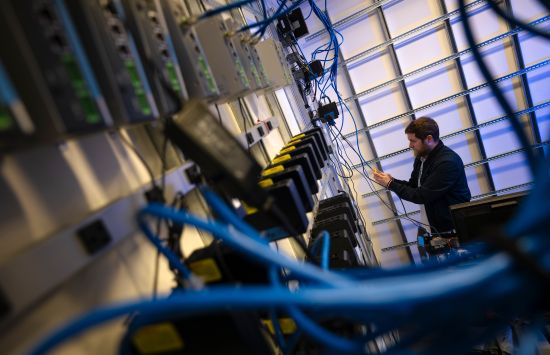
The NSF AI Institute in Dynamic Systems is advancing fundamental artificial intelligence and machine learning theory, algorithms and applications specifically for safe, real-time learning and control of complex dynamic systems.
The NSF Institute for Data, Econometrics, Algorithms, and Learning investigates key aspects of machine learning, high-dimensional data analysis and inference, and data science and society. Areas include theoretical foundations of deep learning, reinforcement learning, machine learning and logic, network inference, high-dimensional data analysis, data science with strategic agents, and trustworthiness, fairness and reliability.
Education and workforce development
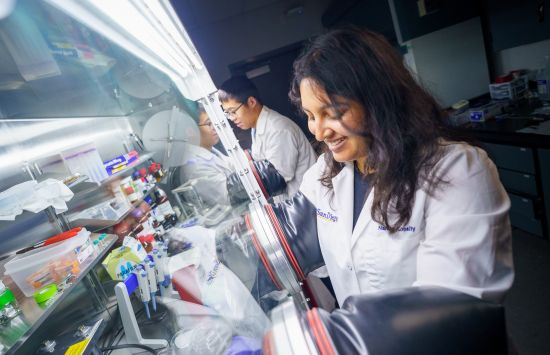
ENG provides opportunities to improve engineering education and expand engineering workforce development. These prepare engineers to lead rewarding careers in industries ranging from energy and electronics to wireless communications and information technology.
Stay connected
Subscribe to email updates from ENG
Get news on funding opportunities, upcoming events and research highlights.
Become a reviewer
Gain insights into the NSF merit review criteria and what makes a good proposal.
Find funding and contact a program director
Search for programs and funding opportunities and find contact information for program directors. See also "5 tips on how to work with an NSF program officer."
Engineering news
See the latest award announcements and research highlights.