




Materials science: The stuff of the modern world
NSF transformed materials science from isolated research efforts into a powerful scientific enterprise that drives innovation across industry and everyday life
The bottom line
- Materials science explores the structure and properties of materials — semiconductors, metals, ceramics, polymers, composites and more — to understand and improve their performance.
- From smartphone screens and silicon computer chips to artificial joints and aircraft components, materials are the building blocks of modern technology.
- Decades of U.S. National Science Foundation investments have enhanced existing materials, created new ones and fueled innovations that power the U.S. economy and everyday life.
What is materials science?
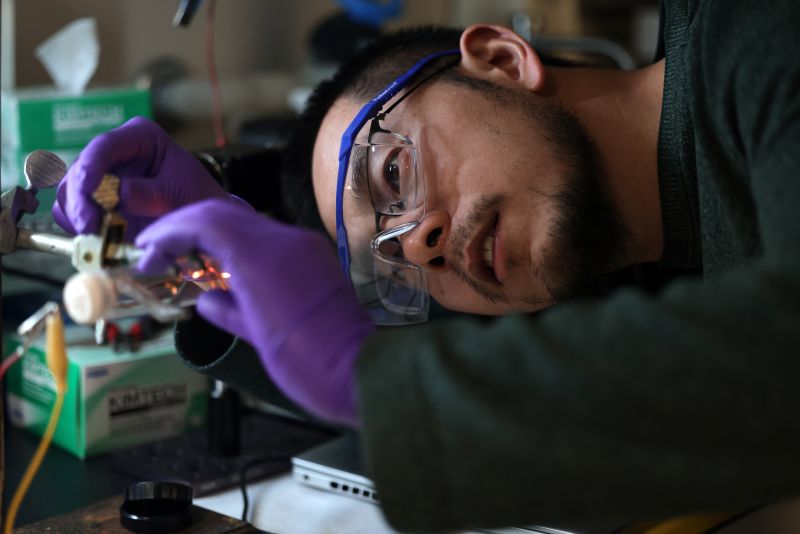
Materials science and engineering explores the basic structure, properties and behavior of materials in bulk form, as well as on the molecular, atomic and even subatomic levels. This understanding helps explain why materials fail, how they can be made stronger or more durable, how they can exhibit new capabilities and how entirely new materials can be designed for specific uses.
Researchers study a wide range of materials, from the familiar, like glass, concrete, metals and plastics, to the exotic, like superconductors, biomaterials and biologically derived materials, and new "designer materials" that are constructed one atomic layer at a time.
Why is materials science important?
Every technology, device, structure and manufactured product depends on the substances from which it is made. From the stone tools that shaped early civilizations to the semiconductors that power today's digital world, advances in materials have continuously expanded what is possible.
New materials can unlock entirely new capabilities, while improvements to existing materials can enhance the performance of current technologies. New materials that are stronger, lighter, more energy-efficient and more reliable enable new technologies that have far-reaching impacts across the economy and society.
Advances in materials have enabled computer chips that power modern smartphones and artificial intelligence systems; artificial joints that restore mobility to millions; lightweight carbon-fiber composites that improve aircraft performance and fuel efficiency; and stronger, more corrosion-resistant bridges, buildings and other critical infrastructure.
NSF investments in materials science
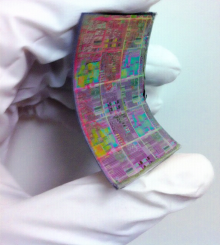
During the Cold War, policymakers increasingly recognized that advances in technology and defense depended on the development of materials with new properties. But research on materials was scattered across disciplines like chemistry, physics, engineering and metallurgy, making it difficult to bring together these fields' insights to solve challenges.
Federal investments, including growing support from NSF, helped connect these previously disparate disciplines and create the modern field of materials science. In the 1950s and 1960s, NSF invested in foundational work in areas such as solid-state physics and polymers. By the early 1970s, the agency had become one of the nation's top supporters of materials research at universities, assuming leadership of a federal research portfolio previously spearheaded by the Department of War.
Through its sustained investments in interdisciplinary materials research, including the longstanding NSF Materials Research Science and Engineering Centers program, NSF support contributed to numerous breakthroughs, including:
- The Nobel Prize-winning discovery of conductive polymers — plastics that can conduct electricity.
- The Nobel Prize-winning development of blue LEDs, which "completed the puzzle" of red, green and blue light needed to produce white light.
- Hydrogels and 3D-printed biomaterials used for contact lenses, wound care and artificial organs.
- Antibacterial coatings that protect crops from disease and drought.
- Self-healing materials for medical, construction and aerospace applications.
- Nanoparticle-based materials that can absorb toxic chemicals, harvest water from desert air or enable real-time tracking of biomolecules.
- Superalloys that better withstand the intense heat of demanding aerospace and energy production applications.
- Transparent conductive ceramics that enable touch-screen devices.
- Stents and other implantable devices made from biodegradable alloys, eliminating the need for a second surgery to remove them.
- New methods for stacking and combining materials and components to create smaller, faster, more powerful microchips.
- Solar cells that self-heal radiation damage.
Delve deeper: Learn more about NSF's history of investments in polymers.
What opportunities remain?
The next generation of technologies will require materials that do not yet exist. With NSF support, researchers are designing materials for new quantum technologies; for making energy-storage systems more efficient and durable; and to maintain performance in environments under extreme heat, pressure and radiation — such as spaceflight, deep-ocean exploration and nuclear applications.
Efforts are also being made to improve the processes for developing materials, such as reducing reliance on finite critical minerals through recyclable and bio-based alternatives and using AI and autonomous laboratories to speed up discovery.
Taking materials research into the future
NSF continues to drive the field of materials science forward through a coordinated portfolio of programs.
Through the NSF Designing Materials to Revolutionize and Engineer our Future (DMREF) program, researchers are combining computer modeling, experimental data and AI to develop new materials more quickly and at lower costs. Innovations include brighter, more energy-efficient OLED displays; improved lithium-ion conductors for safer and longer-lasting batteries; an electrochemical method to separate rare earth elements; detecting nerve agents using liquid crystals; and 3D shape-memory structures that "remember" their original forms for aerospace and other applications.
NSF is also investing in large-scale research centers and collaborative networks that expand national capacity for innovation. Six NSF Materials Research Science and Engineering Centers announced in 2026 will push materials science beyond the state of the art, exploring areas such as exotic materials where light and matter are effectively fused as hybrid particles and soft materials that can potentially deliver medicines precisely within the human body.
Two new NSF Materials Innovation Platforms will enable the discovery and development of materials that can withstand extreme conditions. The platforms serve as user facilities, providing access to specialized equipment and instruments to U.S. researchers from academia and industry, including capabilities for autonomous AI-driven experiments.
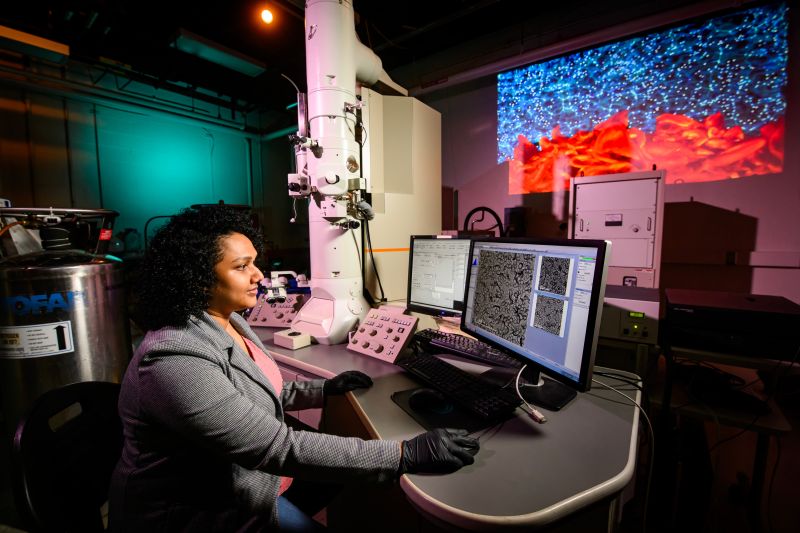
NSF-supported supercomputers are also giving materials researchers the power to test and improve materials virtually before costly laboratory work begins. Researchers have modeled superconductors, battery materials, smart materials and protein-based building blocks, helping scientists better understand how materials behave at atomic and molecular scales and speeding the path from discovery to real-world use.
Building on this foundation, the NSF AI-Materials Institute is developing a cloud-based platform that integrates data generation, AI analysis and rapid feedback to reduce the time it takes to discover new materials for electronics, energy and quantum technologies. In addition, NSF's support of AI-enabled, programmable cloud laboratories is expanding access to tools for creating and testing new materials, allowing researchers to run experiments remotely and at scale. NSF Science and Technology Centers include two centers focused on materials science and engineering: the Center for Integration of Modern Optoelectronic Materials on Demand and the Center for Complex Particle Systems.
The agency also invests in developing the materials science workforce through programs such as DMREF, Engineering Research Centers (ERCs) and AI Institutes, as well as the NSF Research Traineeship Program, which funds interdisciplinary graduate student traineeships that integrate AI training and the development of smart materials, next-generation semiconductors and quantum materials.
NSF investments in materials science continue to strengthen U.S. leadership in innovation by opening new frontiers and shaping the materials that will underpin future industries and technologies. This sustained support is driving economic growth, enhancing the quality of life and expanding what's possible across science and engineering.
Additional resources
- "AI-Powered Labs Accelerating Scientific Discovery" | Podcast
An "NSF's Discovery Files" episode exploring a bold new vision for chemical and materials discovery. - NSF ERC for Cellular Metamaterials
This center develops materials that can help treat cardiac disease. - NSF ERC for Revolutionizing Metallic Biomaterials
This center develops metallic biomaterials and smart coatings that can adapt to biological changes and interact with the human body to improve quality of life. - NSF Nanosystems ERC for Nanomanufacturing Systems for Mobile Computing and Mobile Energy Technologies
The center develops materials for nanomanufacturing systems that will improve computing, wearable devices and energy storage. - NSF Quantum Energy and Sustainable Solar Technologies
This center focuses on materials for improving the efficiency of solar technology used to generate energy.