




The U.S. National Science Foundation Quantum Leap Challenge Institutes are large-scale interdisciplinary research centers focused on advancing quantum information science, engineering and technology through innovation, collaboration and education. The institutes conduct foundational research aimed at solving some of the hardest scientific problems in the global race to create powerful quantum-based technologies.
The institutes generate results and breakthroughs in quantum information science and technology, which use quantum properties of particles of matter and energy — like superposition and entanglement — for new approaches and applications. These breakthroughs can enable new areas of scientific exploration and technologies that enhance human health, national security and economic competitiveness. The goals of the institutes are aligned with the "National Quantum Initiative Act," which calls for a coordinated federal effort to accelerate quantum research and development for the economic and national security of the U.S.
As part of their mission to tackle daunting quantum-focused challenges, the institutes foster collaborative partnerships between academia, government and industry. They also provide specialized education, training and workforce development opportunities to expand the U.S. quantum science and engineering workforce.
The NSF Quantum Leap Challenge Institutes
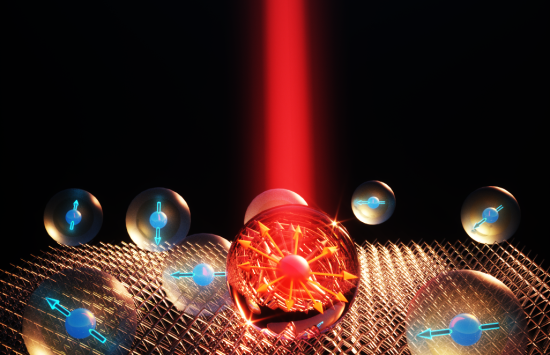
NSF Quantum Leap Challenge Institute for Fault Tolerant Quantum Systems, Architectures and Applications (NSF FTQSAA)
NSF FTQSAA investigates new methods to make quantum technologies more robust and resistant to the inherent fragility of quantum information.
Their work spans experimentation with new software and hardware, including new materials that can be used to make quantum sensors and computers more reliable.
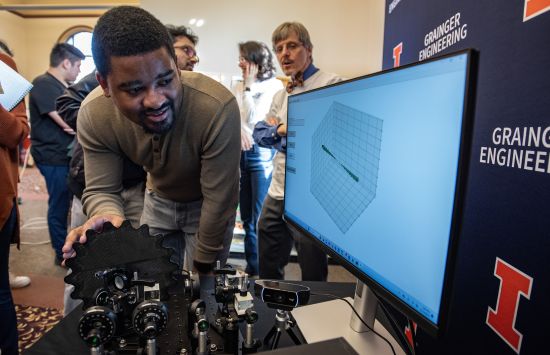
NSF Quantum Leap Challenge Institute for Hybrid Quantum Architectures and Networks (NSF HQAN)
NSF HQAN tackles the science and engineering needed to create modular quantum computers that are interconnected and work together.
Unlike a single quantum computer that uses a particular qubit technology, their modular approach joins different types of qubit technologies, each optimized for particular tasks to achieve enhanced performance.
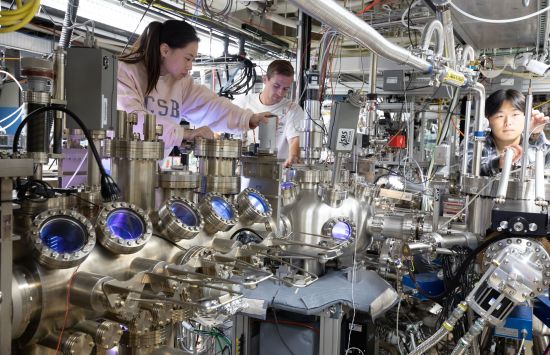
NSF Quantum Leap Challenge Institute for Manufacturable and Resilient Superconducting Quantum Information Systems (NSF MARQUIS)
NSF MARQUIS uses materials science, semiconductor fabrication techniques and other disciplines to develop Josephson junctions with improved abilities.
Such junctions are key electronic components in quantum computers and other technologies that use superconducting qubits.
NSF Quantum Leap Challenge Institute for Physics and Engineering of Practical Quantum Error Correction (NSF PRACTIQAL)
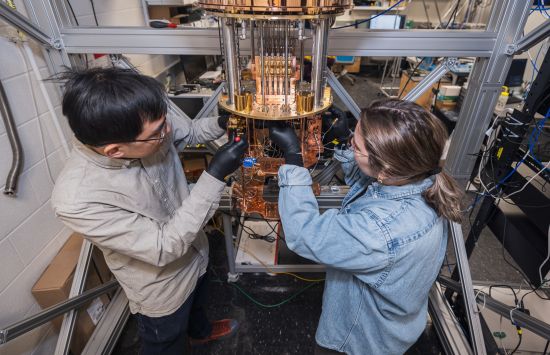
NSF PRACTIQAL creates new and more effective methods to correct errors commonly encountered in quantum computing systems, thus increasing the usefulness and scalability of quantum computers broadly.
Their research spans experimentation with hardware, algorithms and other software, and theoretical methods that can enable better error correction techniques for large-scale quantum computers that have yet to be made.

NSF Quantum Leap Challenge Institute for Quantum Computation (NSF CIQC)
NSF CIQC discovers and demonstrates new quantum algorithms and hardware architectures and uses them to in turn discover new materials and methods that can enhance quantum computation.
Their work spans a broad range of quantum computing techniques including neutral atoms, trapped ions and solid-state systems.
NSF Quantum Leap Challenge Institute for Quantum Sensing for Biophysics and Bioengineering (NSF QuBBE)
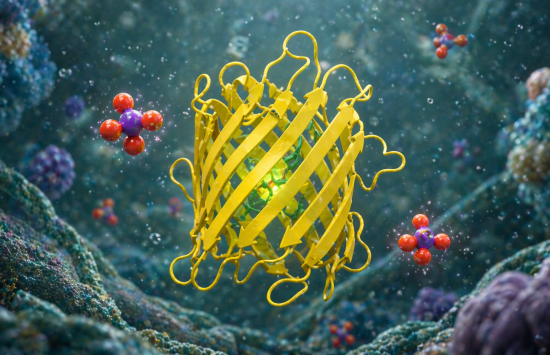
NSF QuBBE uses quantum properties of nature, such as entanglement, to create sensors that can probe and measure biological processes with unprecedented sensitivity and accuracy.
Their research includes the development of quantum nanoprobes, techniques to measure properties inside living cells and how such technologies can improve capabilities in biology and medicine.
NSF Quantum Leap Challenge Institute for Quantum Systems through Entangled Science and Engineering (NSF Q-SEnSE)
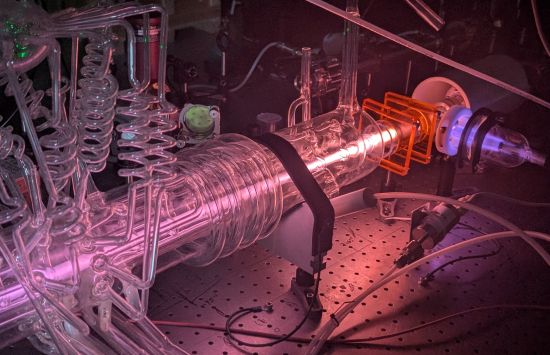
NSF Q-SEnSE focuses on fundamental science and technology development to achieve new precision sensing and measurement capabilities through experimental and theoretical research.
Their work includes quantum simulations, solid-state systems, molecular sensors, new types of exceptionally precise atomic clocks and other innovations.
NSF Quantum Leap Challenge Institute for Robust Quantum Simulation (NSF RQS)
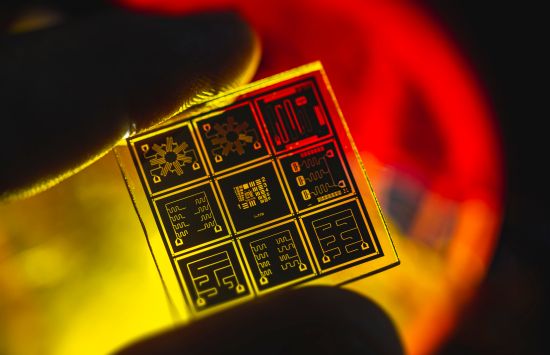
NSF RQS targets the development and applications of quantum simulations that are valuable for scientific investigation of complex phenomena, industrial production of large-scale quantum technologies or both.
Their work spans new algorithms, systems architecture, materials science and other areas.

Unlocking Big Technologies with Quantum-scale Science
In the quantum world, the laws of physics become peculiar. Researchers are exploring how to control the behavior of quantum systems to create quantum technologies that can do what no other technology can.