




Get MPS Email Updates
The U.S. National Science Foundation Directorate for Mathematical and Physical Sciences (NSF MPS) is one of the preeminent federal forces behind over 75 years of major scientific breakthroughs and innovations — from the discovery of new properties of energy and matter to the creation of entirely new fields of mathematics.
NSF MPS supports fundamental research in astronomical sciences, chemistry, materials, mathematical sciences and physics. MPS also manages ambitious, multidisciplinary research centers and institutes focused on major scientific challenges. The directorate supports fundamental science and research infrastructure that advances scientific knowledge and enhances the nation's economic growth, security and quality of life.
MPS investments are also building the scientific workforce of the future by providing specialized training, education and mentorship opportunities in labs across the U.S.
MPS news


Upcoming events

Recent funding opportunities
What we support
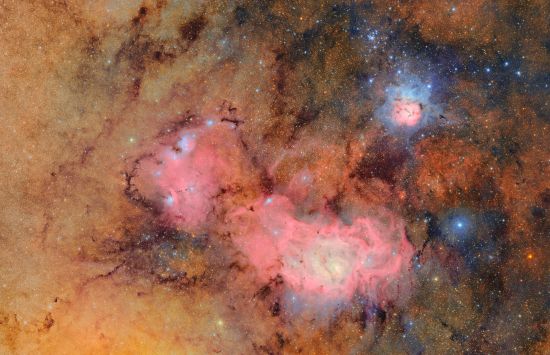
Astronomical sciences
MPS supports the ground-based exploration of space. From asteroids to black holes, this work enables the discovery and understanding of objects and phenomena within our solar system, the Milky Way galaxy and other galaxies, and the entire universe.
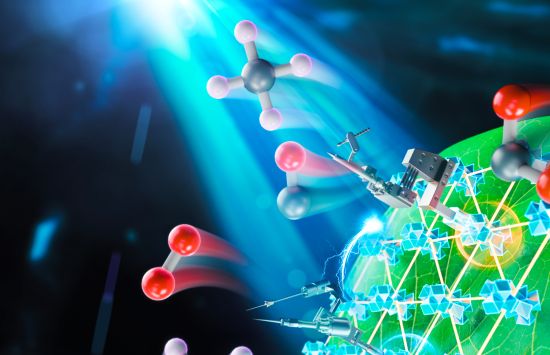
Chemistry
MPS supports fundamental discovery, invention and innovation in the chemical sciences. This work creates a strong scientific foundation for future technologies and the chemical industry, which is central to the U.S. economy and our daily lives.

Materials research
MPS supports fundamental understanding of materials, their properties and their potential applications. Materials research provides critical building blocks for technology and innovation, from new types of electronics and batteries to medical devices and body armor.
Mathematical sciences
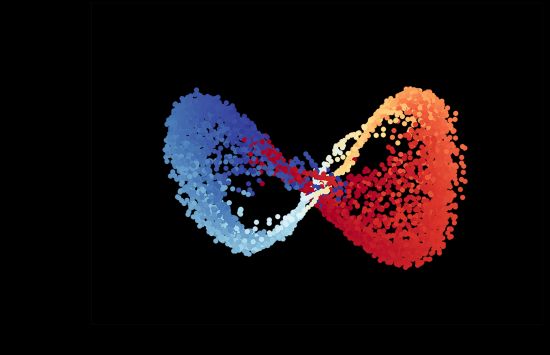
MPS supports multiple research programs at the frontiers of discovery in theoretical and applied mathematical sciences. Mathematical sciences play an essential role in all fields of science and technology and underpin many aspects of society and security, from weather forecasting to cryptography.

Physics
MPS supports physics research that enables human understanding of the fundamental aspects of nature at all scales, from quantum-scale effects inside atoms to the dark energy that spans the entire universe. Breakthroughs in physics have led to technologies including GPS, MRI and quantum computers.
Research infrastructure
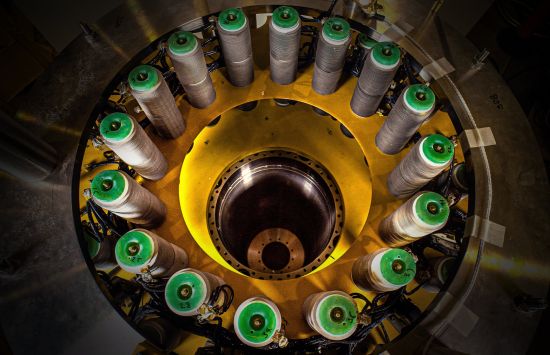
NSF supports research facilities that provide scientists with unique instruments and capabilities to explore the physical universe, including multiple astronomy observatories, the NSF National High Magnetic Field Laboratory, particle detectors at the Large Hadron Collider, and others.