



The U.S. National Science Foundation Directorate for Mathematical and Physical Sciences (NSF MPS) supports multiple research programs at the frontiers of discovery in theoretical and applied mathematical sciences. These programs play an essential role in the U.S. innovation engine that drives the economy, strengthens national security and enhances quality of life.
Mathematical sciences are crucial to everyday life, from securing financial transactions and predicting the weather to building effective search engines and designing industrial manufacturing facilities. These systems and many more rely on algorithms, number theory, algebraic geometry and modeling techniques within computational or applied mathematics and statistics.
Mathematical sciences also play an essential role in new and emerging technologies including artificial intelligence, biotechnology, quantum computing and more.
NSF MPS programs in mathematical sciences foster interdisciplinary partnerships across all fields of science, engineering and technology and many industrial sectors. They also support students and early-career researchers who will strengthen America's science, technology, engineering and mathematics workforce as the next generation of mathematical science professionals.
 On this page
Mathematical sciences programs
MPS invests in multiple mathematical sciences programs supporting disciplinary and interdisciplinary research, individual researchers and groups, and education and training opportunities for students.
Algebra and Number Theory
Supports research in algebra, algebraic and arithmetic geometry, number theory and representation theory.
Analysis
Supports research in complex, harmonic and real analysis; dynamical systems and ergodic theory; functional analysis; mathematical physics; operator theory and operator algebras; partial differential equations and calculus of variations.
Applied Mathematics
Supports mathematics research motivated by or affecting problems arising in science and engineering.
Combinatorics
Supports research on discrete structures. Focus areas include algebraic and geometric combinatorics, probabilistic and structural graph theory.
Computational Mathematics
Supports the development and analysis of innovative approaches to address the broad range of mathematical questions and challenges that arise from the implementation of numerical algorithms.
Foundations
Supports research in mathematical logic and the foundations of mathematics, including proof theory, recursion theory, model theory, set theory and infinitary combinatorics.
Geometric Analysis
Supports research in differential geometry, geometric partial differential equations, geometric methods in modern mathematical physics, geometry of convex sets, integral geometry and related geometric topics.
Mathematical Biology
Supports research in all areas of applied and computational mathematical sciences relevant to the biological and life sciences.
Mathematical Sciences Focused Research Groups
Supports collaborative groups employing innovative methods to solve specific, major research challenges in the mathematical sciences.
Mathematical Sciences Research Infrastructure
Supports efforts to strengthen research infrastructure across the mathematical sciences community and training projects that complement existing opportunities.
Mathematical Sciences Research Training Groups
Supports efforts to improve graduate student research training and professional development in all areas of the mathematical sciences.
Probability
Supports research on the theory and applications of probability including discrete probability, stochastic processes, limit theory, interacting particle systems, stochastic differential and partial differential equations and Markov processes.
Statistics
Supports research in statistical theory and methods, including research in statistical methods with applications in any domain of science and engineering.
Topology
Supports research on algebraic topology, differential topology, geometric group theory and low dimensional topology.
Mathematical Sciences Research Institutes
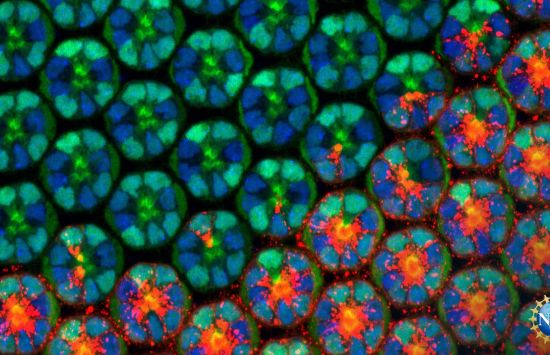
MPS supports multiple Mathematical Sciences Research Institutes that conduct ambitious research in the mathematical sciences while amplifying the impact of math in other scientific disciplines, from biology and biomedicine to computer science. The institutes create innovations that use mathematics to respond to national needs and strive to expand the talent base engaged in mathematical and statistical research in the U.S.


Crosscutting and special programs
MPS also invests in interdisciplinary programs that align with national priorities such as quantum algorithms and computing, artificial intelligence, digital twins, energy, security, public health and more. Often, these programs are conducted in partnership with other federal agencies including the U.S. Department of Energy, National Institutes of Health, U.S. Food and Drug Administration, Air Force Office of Scientific Research, National Geospatial-Intelligence Agency and others.
Additional resources
Subscribe to email updates from MPS
Get news on funding opportunities, upcoming events and research highlights.
Attend virtual office hours and webinars
Talk directly with MPS program directors and learn how to submit a proposal.
Find funding and contact a program director
Search for MPS programs and funding opportunities and find contact information.
Preparing your proposal
A guide with helpful tips on how to write and submit a research proposal to NSF.